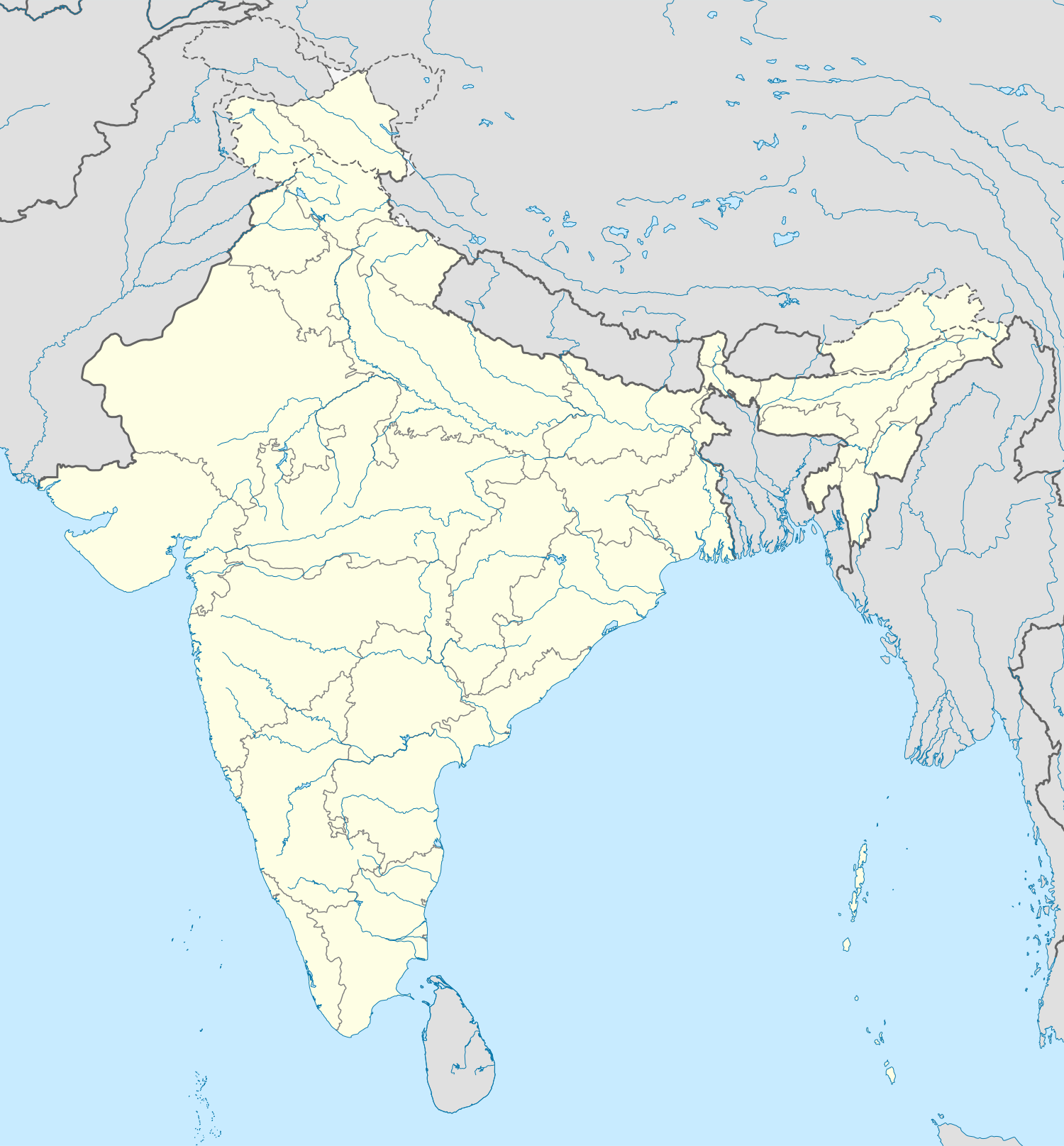
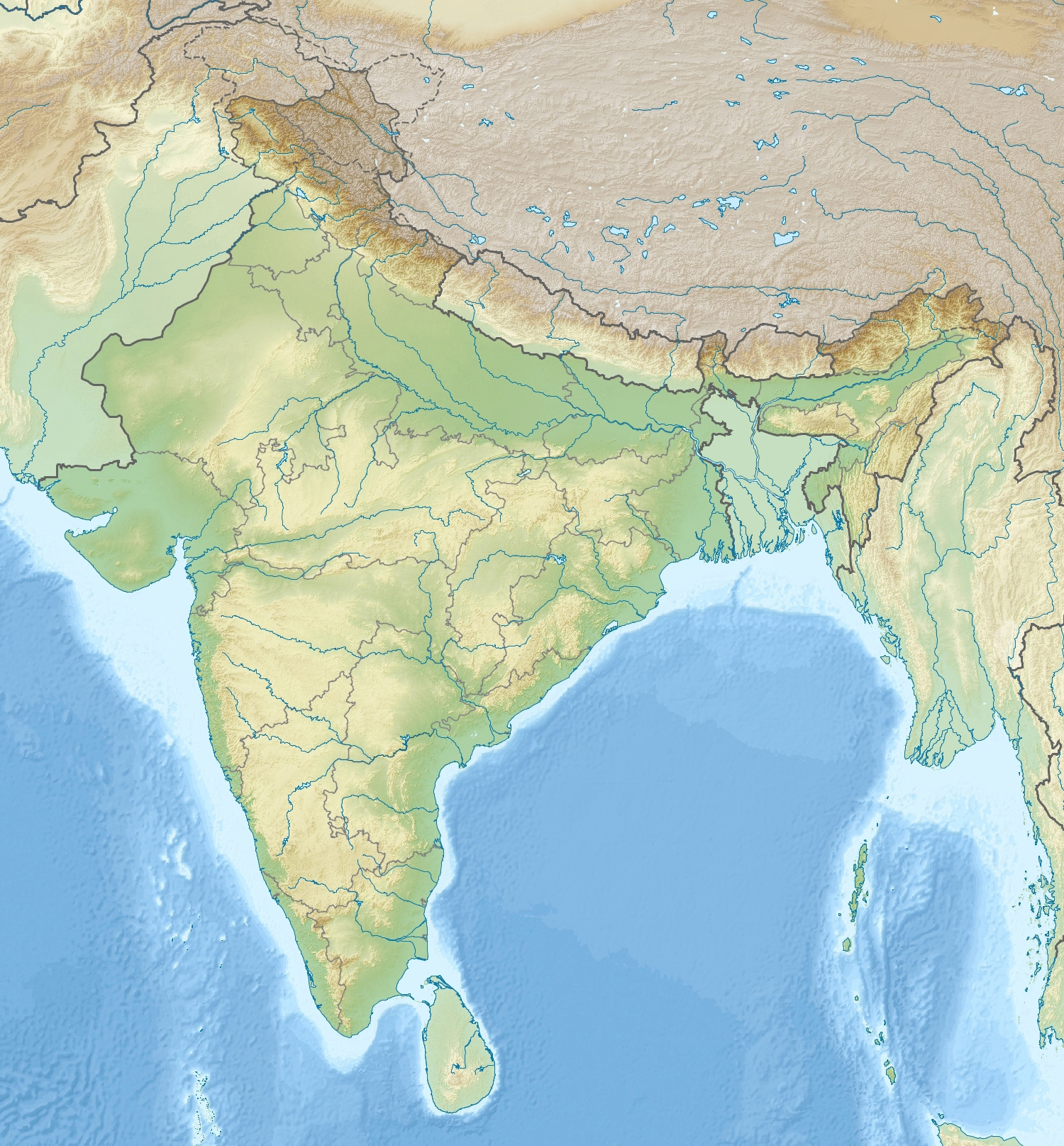
Locate the place
 HampiMysuruBengaluru
 Western GhatsKaveriBengaluru
Marker uses stored geographic coordinates on equirectangular location-map bounds. India map bases: Wikimedia Commons / Uwe Dedering (CC BY-SA 3.0). World political base: public domain; physical world base: Gundan (CC BY-SA 4.0).
📌 Why in News?
In August 2026, private space technology startup Astrobase Space Technologies unveiled 'EVEREST' in Bengaluru, Karnataka. EVEREST is India's first privately built 800 kN Full-Flow Staged Combustion (FFSC) **LOX-**Methane rocket engine. Designed to power reusable launch vehicles, this landmark development establishes India as only the fourth nation globally to possess this advanced propulsion technology, highlighting the rapid technological maturation of India's private aerospace sector.
Syllabus & Relevance
Prelims: Science and Technology- Space technology, Satellites, and Launch Vehicles.
Mains (GS-3): Technology missions; Awareness in the fields of Space; Contributions of Indians in science & technology; Indigenization of technology and developing new technology.
Why it matters for India
This technological breakthrough places India in an elite club of four nations possessing Full-Flow Staged Combustion capabilities.
It enhances India's domestic launch capacity, supports the development of reusable launch vehicles (RLVs) to reduce launch costs, and drives the strategic indigenization of high-tech aerospace manufacturing within India's private defense and space industrial base.
Static Foundation
The Full-Flow Staged Combustion (FFSC) cycle is a highly advanced rocket engine cycle.
In a standard staged combustion cycle, only a portion of the propellant is burned in a pre-burner to power the turbopumps.
In contrast, an FFSC engine passes the entire flow of both the fuel (methane) and the oxidizer (liquid oxygen) through separate pre-burners to drive their respective turbopumps before entering the combustion chamber.
This design yields maximum thermodynamic efficiency, increases thrust-to-weight ratios, and lowers the operating temperatures of the turbines, which greatly extends the engine's operational life.
Furthermore, the use of **LOX-**Methane (Liquid Oxygen and Methane) provides a clean-burning propellant combination that leaves minimal soot, preventing turbine clogging and enabling rapid refurbishing for reusable launch vehicles.
Data, Reports, Cases & Examples
Engine Name: EVEREST
Thrust Rating: 800 kN (kilonewtons)
Cycle Type: Full-Flow Staged Combustion (FFSC)
Propellants: Liquid Oxygen (LOX) and Methane (**LOX-**Methane)
Developer: Astrobase Space Technologies (private Indian firm)
Global Ranking: India is the 4th nation to develop FFSC technology
Prelims Quick Facts
Engine Identity: The 'EVEREST' engine is India's first privately-built rocket engine of its class.
Thrust Specification: It has an operational thrust capacity of 800 kN (kilonewtons).
Advanced Propulsion Cycle: It utilizes a Full-Flow Staged Combustion (FFSC) cycle, which routes all propellants through pre-burners.
Propellant Chemistry: The engine runs on a Liquid Oxygen (LOX) and Methane combination, known as **LOX-**Methane.
Global Milestone: The successful creation of this engine makes India the fourth nation in the world to master FFSC technology.
Design Focus: The engine is specifically engineered to power next-generation Reusable Launch Vehicles (RLVs).
Developer and Location: Developed by Astrobase Space Technologies, the engine was officially unveiled in Bengaluru.
Developer Misattribution: Questions may claim that ISRO or a public sector undertaking (PSU) built the EVEREST engine. Correction: It is entirely privately designed and built by Astrobase Space Technologies.
Mains-only layer✍️ Open Mains Perspective & Answer FrameworkClick to expand ↓
Mains Perspective
Background
For decades, India's space program was characterized by a centralized, state-run model led by the Indian Space Research Organisation (ISRO). With recent policy reforms opening the space sector, private players have evolved from simple component suppliers to developers of advanced, high-thrust rocket engines. The introduction of Astrobase Space Technologies' 800 kN 'EVEREST' engine represents a major milestone in this transition.
**Significance
The Full-Flow Staged Combustion (FFSC)** cycle represents the cutting edge of liquid rocket propulsion. By passing the full flow of both oxidizer and fuel through separate pre-burners, the engine optimizes turbopump efficiency and minimizes the risk of gas leaks. Using **LOX-**Methane as a fuel prevents carbon buildup (soot or coking) within the engine, allowing the same engine to be reflown multiple times with minimal maintenance.
India-specific Implications
Mastering this technology enhances India's global competitive edge in the commercial satellite launch market. Privately developed heavy-thrust engines like EVEREST can reduce reliance on government-funded launch systems, diversify the nation's launch options, and drastically reduce the cost per kilogram of lifting payloads into orbit, boosting the domestic commercial space economy.
Challenges and Criticisms
Transitioning from an engine unveiling to orbital flight involves massive hurdles. Private entities face steep barriers, including a lack of private high-thrust testing facilities, high capital requirements for full-scale rocket development, and complex regulatory compliance protocols for private space launches.
Way Forward
To leverage this breakthrough, a robust ecosystem of public-private partnerships is necessary. Under the aegis of **IN-**SPACe, providing startups with streamlined access to ISRO's testing infrastructure and establishing clear procurement policies for private launch services will help transform these indigenous technologies into operational commercial assets.
Answer Framework
Answer Framework
-
Introduction: Define the Full-Flow Staged Combustion (FFSC) cycle and introduce Astrobase Space Technologies' 'EVEREST' 800 kN engine unveiled in Bengaluru, highlighting India's entry as the fourth country to possess this technology.
-
Body Dimension 1 (Technological Advantages of FFSC & LOX-Methane): Explain the working of FFSC (complete routing of propellants through pre-burners), its thermodynamic efficiency, and why **LOX-**Methane is ideal for Reusable Launch Vehicles (RLVs) due to its soot-free combustion.
-
Body Dimension 2 (Strategic & Economic Importance for India): Discuss how private high-thrust engine development supports Atmanirbhar Bharat, lowers launching costs, and expands India's market share in the global commercial space sector.
-
Body Dimension 3 (Challenges in Scaling Up): Detail hurdles such as capital-intensive testing, infrastructural gaps, and regulatory pathways for private launches.
-
Conclusion: Outline the role of **IN-**SPACe and public-private cooperation in bridging test infrastructure gaps and securing global market leadership.
Possible Mains Question
Analyze the technological and strategic significance of the Full-Flow Staged Combustion (FFSC) engine cycle for space exploration. How does the development of the privately built 800 kN 'EVEREST' **LOX-**Methane engine by an Indian firm advance the country's commercial space objectives?