CP

CurrentPulse AI

Daily · Static · PYQ-linked

← All categories

Polity & Governance

16 published UPSC current-affairs articles

Polity & Governance
Polity & GovernanceGS-2

The stakes in India’s delimitation debate

Context: The upcoming post 2026 delimitation exercise has triggered widespread debate regarding how parliamentary seats will be reallocated among states once the 2027 Census data is published. About The stakes in India ’s delimitation debate: Delimitation is the statutory process of fixing or redrawing the territorial boundaries of Lok Sabha and State Legislative Assembly constituencies to reflect population changes.

Polity & Governance
Polity & GovernanceGS-2

Supreme Court Directs Measures to Curb ‘Digital Arrest’ Scams

Supreme Court Directs Measures to Curb ‘Digital Arrest’ Scams Recently, the Supreme Court directed the Centre, States/UTs, RBI , telecom authorities and investigating agencies to adopt coordinated measures to curb “digital arrest” scams and ensure timely recovery of victims’ money. SC Directions: The Supreme Court directed the RBI to issue an SOP within four weeks for temporary debit holds on mule accounts linked to cyber fraud or money laundering and share it with the Registrars General of High Courts.

Polity & Governance
Polity & GovernanceGS-2

SC Seeks Govt’s Reply on Pleas Against RTI Changes through DPDP Act

The Supreme Court granted the Centre two weeks to respond to petitions challenging amendments to the Right to Information (RTI) Act made through the Digital Personal Data Protection (DPDP) Act . Background: Section 44(3) of DPDP Act had amended the RTI Act to facilitate public authorities to refuse information on the ground that the details sought was of a “personal” nature. Section 8(1)(j) of the RTI Act deals with exemption from disclosure of personal information.

Polity & Governance
Polity & GovernanceGS-2

Inter-State River Water Governance and Disputes in India

During the presentation of Tamil Nadu's state budget, Finance Minister N. Marie Wilson asserted that the state government would safeguard its rightful share of inter state river waters. This immediate political development brings the broader governance, constitutional mechanics, and federal challenges surrounding inter state river water allocation into sharp focus, highlighting persistent tensions between riparian states regarding resource sharing and basin management.

Polity & Governance
Polity & GovernanceGS-2

VISHWAS 2026: EPFO's One-Time Dispute Resolution Mechanism for PF Damages

The Employees' Provident Fund Organisation (EPFO) launched VISHWAS 2026 as a one time, digital, and time bound dispute resolution initiative. The scheme facilitates the amicable settlement of disputes concerning damages and penalties imposed for defaults in provident fund compliance. Implemented under the Ministry of Labour & Employment, it provides eligible employers an opportunity to settle pending cases at concessional rates, reducing litigation and compliance burdens. The framework operates for a period of six months from its notification and aims to simplify settlement through a transparent digital mechanism, offering substantially rationalised penal damages including graded rates for shorter periods of default.

Polity & Governance
Polity & GovernanceGS-2

Clean Slate Doctrine under the Insolvency and Bankruptcy Code: Finality of Resolution Plans and the Ujaas Energy Exception

The Supreme Court delivered its judgment in Ujaas Energy Ltd. v. West Bengal Power Development Corporation Ltd., clarifying the scope of the Clean Slate Doctrine under the Insolvency and Bankruptcy Code (IBC), 2016. The ruling specifically addresses whether omitted counterclaims survive after a resolution plan is approved and examines how past claims may still be invoked defensively in arbitration proceedings.

The Legal Process and Judicial Framework for Withdrawing and Closing FIRs
Polity & GovernanceGS-2

The Legal Process and Judicial Framework for Withdrawing and Closing FIRs

The Supreme Court recently clarified that State governments remain fully empowered to close or withdraw First Information Reports (FIRs) registered against student protesters during mass agitations, provided they strictly follow the statutory procedures prescribed under the Bharatiya Nagarik Suraksha Sanhita (BNSS). This clarification reinforces the rule of law by confirming that while governments can initiate the withdrawal of cases, such actions cannot occur via arbitrary executive cancellation and must instead navigate established judicial and statutory channels.

Polity & Governance
Polity & GovernanceGS-2

Money Bills in India

Context: The Rajya Sabha passed the Supreme Court (Number of Judges) Amendment Bill , 2026, increasing the sanctioned strength of Supreme Court judges from 34 to 38 (including the CJI). However, its passage as a Money Bill sparked renewed debate over the executive’s use of this route to bypass full legislative scrutiny in the Rajya Sabha. A Money Bill is a specific category of financial legislation in India that deals exclusively with matters such as taxation, government expenditure, borrowing, and the appropriation of funds from the Consolidated Fund of India .

Polity & Governance
Polity & GovernanceGS-2

TRAI MyCall: Citizen-Driven Mobile Network Quality Monitoring

The Telecom Regulatory Authority of India (TRAI) has launched an upgraded TRAI MyCall application to enable citizens to provide real time feedback on mobile network quality, strengthening consumer centric telecom regulation. A crowdsourcing based mobile application developed by TRAI to collect user feedback on voice call quality. Users can rate call quality and provide information about the location and network experience.

The Slender-billed vultures and White-rumped vultures
Polity & GovernanceGS-2

The Slender-billed vultures and White-rumped vultures

Context: In a world first milestone, five captive bred Slender billed vultures along with five White rumped vultures were released into the wild using the ‘Soft Release’ scientific method in the Biswanath Wildlife Division of Kaziranga National Park, Assam. About Slender billed vultures and White rumped vultures: About Slender Billed Vulture (Gyps tenuirostris):

The Quit India Movement
Polity & GovernanceGS-2

The Quit India Movement

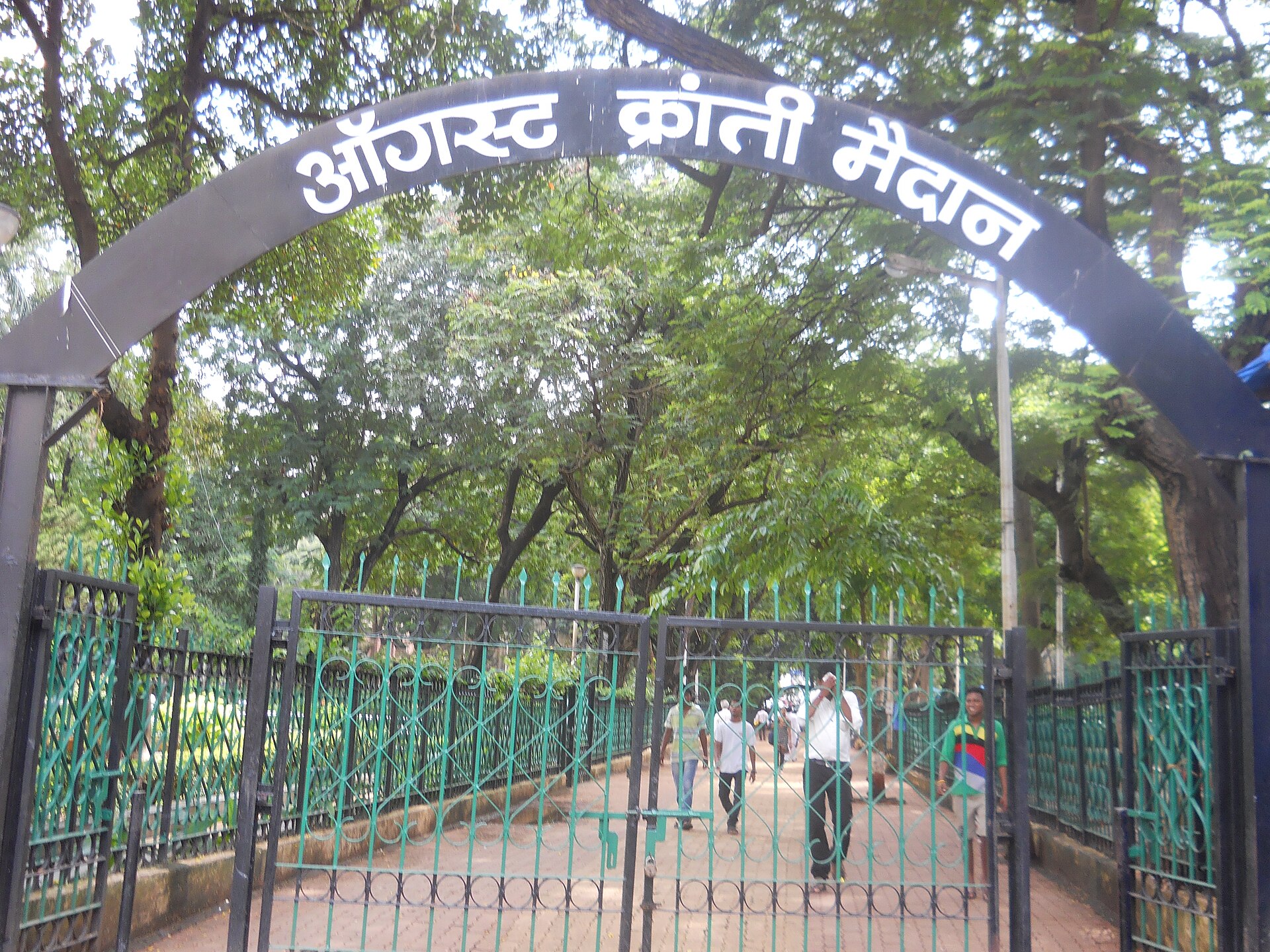
The Chairman of the Rajya Sabha made a solemn reference in Parliament to commemorate the 84th Anniversary of the Quit India Movement. The observance highlights the historical significance of the mass civil disobedience launched to demand an immediate end to British colonial rule in India.

Polity & Governance
Polity & GovernanceGS-2

What Does the Centre's Opposition to Creamy Layer Exclusions for SC/STs Entail?

The Union Government has opposed petitions in the Supreme Court seeking the application of the 'creamy layer' exclusion principle to Scheduled Castes (SCs) and Scheduled Tribes (STs). The Centre emphasized before the apex court that the creamy layer doctrine applies strictly to Other Backward Classes (OBCs) and cannot be extended to SCs and STs, as reservation for SC/ST communities is rooted in overcoming historical social discrimination and untouchability rather than financial backwardness. This position follows a landmark 2024 Supreme Court judgment that allowed state governments to sub categorize SC/ST lists to ensure benefits reach the most backward within these categories.

Polity & Governance
Polity & GovernanceGS-2

Supreme Court Mandates SOPs, Mechanisms to Curb ‘Digital Arrests’

The Supreme Court passed a detailed order directing the Centre, States, the Reserve Bank of India and telecom authorities to prepare standard operating procedures (SOPs) to curb “digital arrests” scams. A digital arrest is a cyber extortion scam where fraudsters impersonate law enforcement or government officials, using fake video calls, staged studio backdrops, and forged legal documents to terrify victims into believing they face immediate imprisonment, forcing them to transfer money under extreme psychological pressure. Main Challenges in Tackling the Scams

Polity & Governance
Polity & GovernanceGS-2

Supreme Court Issues Gender-Sensitivity Guidelines for Trial Judges to Prevent Retraumatization

In August 2026, the Supreme Court of India released a comprehensive report directing trial judges across the country to adopt gender sensitive courtroom practices, cultivate emotional intelligence, and eliminate judicial conduct that causes retraumatization to sexual assault survivors. The landmark initiative focuses on dismantling patriarchal stereotypes within the lower judiciary, reforming procedural interactions during criminal trials, and revising judicial language to ensure compassionate handling of gender based violence cases. By providing explicit behavioral guidelines and language revisions, the apex court seeks to institutionalize survivor centric jurisprudence, ensuring that trial proceedings uphold fundamental dignity and constitutional guarantees rather than aggravating victim trauma through insensitivity.

Copyright Protection and Artificial Intelligence: Analyzing the Delhi High Court's Verdict on OpenAI and ANI Media
Polity & GovernanceGS-2

Copyright Protection and Artificial Intelligence: Analyzing the Delhi High Court's Verdict on OpenAI and ANI Media

The Delhi High Court recently dismissed a plea for an interim injunction filed by ANI Media against artificial intelligence firm OpenAI. This landmark judicial development establishes an initial legal framework for AI related copyright disputes in India. In its ruling, the High Court clarified that Indian domestic copyright law applies to such disputes. Crucially, the court indicated that training AI models on copyrighted digital content can potentially fall under the 'fair dealing' doctrine, even when commercial interests are involved, due to the significant public benefits generated by AI technological advancement.

Polity & Governance
Polity & GovernanceGS-2

Live-in partner now protected against domestic cruelty: What SC said

On 4 August 2026, the Supreme Court of India ruled that women in live in relationships with an 'intent to marry' are entitled to protection against domestic cruelty under criminal law. The Court applied the legal principles underlying Section 498A of the Indian Penal Code, which addresses cruelty by a husband or his relatives, to the provisions of the new Bharatiya Nyaya Sanhita (BNS). By extending this safeguard to non‑marital cohabitation where marriage is intended, the judgment expands the ambit of legal protection beyond traditional marriage, reflecting evolving social realities and reinforcing the state’s duty to prevent gender‑based violence.