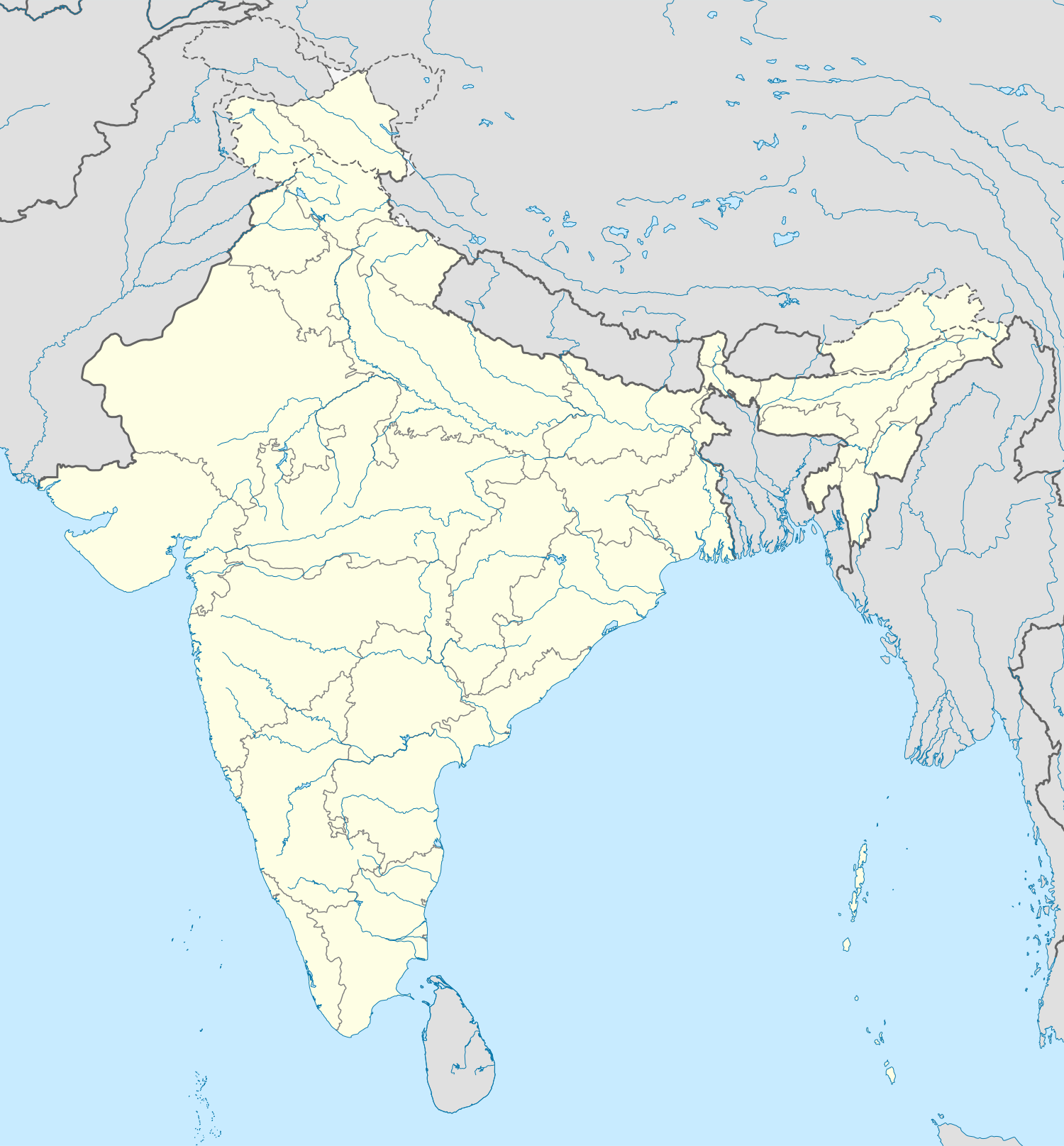
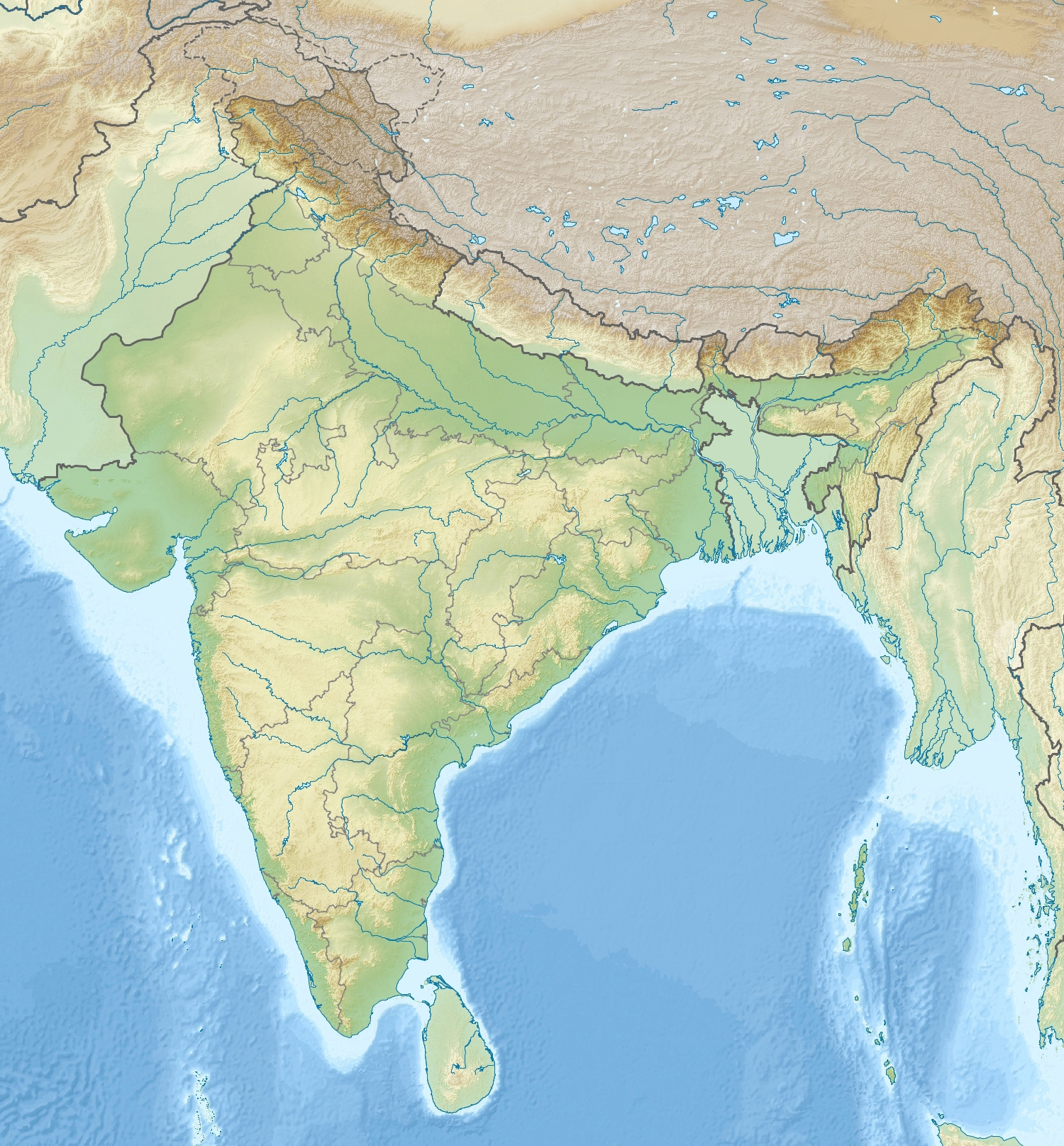
Locate the place
 MahabalipuramMaduraiTamil Nadu
 KaveriNilgiri HillsTamil Nadu
Marker uses stored geographic coordinates on equirectangular location-map bounds. India map bases: Wikimedia Commons / Uwe Dedering (CC BY-SA 3.0). World political base: public domain; physical world base: Gundan (CC BY-SA 4.0).
📌 Why in News?
During the presentation of Tamil Nadu's state budget, Finance Minister N. Marie Wilson asserted that the state government would safeguard its rightful share of inter-state river waters. This immediate political development brings the broader governance, constitutional mechanics, and federal challenges surrounding inter-state river water allocation into sharp focus, highlighting persistent tensions between riparian states regarding resource sharing and basin management.
Syllabus & Relevance
Prelims Domain: Indian Polity and Governance - Constitutional Provisions, Statutory Bodies, and Federalism.
| GS Paper II: Functions and responsibilities of the Union and the States, issues and challenges pertaining to the federal structure.
| Current-Static Link: Statutory frameworks of Article 262 and the 1956 Acts interacting with contemporary state budget declarations and regional water assertions.
Why it matters for India
Water resource management across state boundaries is critical for India's cooperative federalism, inter-state harmony, agricultural stability, and national food security, as river basins cross political lines without respecting administrative borders.
Static Foundation
Inter-state river water encompasses resources from rivers, streams, and valleys flowing through or forming boundaries between multiple states.
Article 262(1) empowers Parliament to enact laws for adjudicating inter-state river water disputes.
Article 262(2) permits Parliament to exclude the jurisdiction of the Supreme Court and other courts over such disputes.
Entry 17 of the State List covers water supplies, irrigation, canals, and water power, subject to Union oversight.
Entry 56 of the Union List empowers the Centre to regulate and develop inter-state rivers and river valleys in the public interest.
The Inter-State River Water Disputes (ISRWD) Act, 1956, provides for the creation of ad-hoc tribunals upon the failure of direct negotiations.
The River Boards Act, 1956, enables the establishment of advisory boards for integrated river basin management.
Data, Reports, Cases & Examples
Tamil Nadu State Budget: Finance Minister N. Marie Wilson publicly asserted the state's firm resolve to safeguard its rightful share of inter-state river waters.
Inter-State River Water Disputes (ISRWD) Act, 1956: Enacted specifically under Article 262 of the Constitution to manage water dispute complaints through ad-hoc tribunals.
River Boards Act, 1956: Enacted under Entry 56 of the Union List to empower the Central Government to establish River Boards.
Binding Tribunal Awards: Decisions rendered by tribunals carry the force of a Supreme Court decree and are final and binding on contesting states.
Constitutional Exclusion: Article 262(2) explicitly excludes the jurisdiction of the Supreme Court or any other court over statutory water dispute adjudications.
Prelims Quick Facts
Inter-state river water resources cover rivers, streams, and river valleys that flow through or form boundaries between two or more states.
Article 262(1) empowers Parliament to enact laws for the adjudication of inter-state water disputes.
Article 262(2) allows Parliament to exclude the jurisdiction of the Supreme Court and other courts over these disputes.
Entry 17 of the State List covers water supplies, irrigation, canals, drainage, embankments, water storage, and water power.
Entry 56 of the Union List empowers the Central Government to regulate and develop inter-state rivers and river valleys declared by Parliament in the public interest.
ISRWD Act, 1956 empowers the Central Government to constitute an ad-hoc tribunal when negotiations between states fail.
Tribunal Awards carry the force of a decree of the Supreme Court and are final and binding.
River Boards Act, 1956 authorizes the Centre to set up River Boards upon request from state governments or on its own initiative in an advisory role.
Mains-only layer✍️ Open Mains Perspective & Answer FrameworkClick to expand ↓
Mains Perspective
Background
Inter-state river water management arises because river basins do not conform to state political boundaries. The allocation, management, and sharing of these waters require robust inter-state coordination and federal adjudication mechanisms, which are anchored in the Constitution of India under Article 262 and the Seventh Schedule.
Significance
Effective resolution of water disputes is vital for maintaining peace, cooperative federalism, and judicial finality between states. Statutory instruments like the ISRWD Act and River Boards Act provide institutional backstops to prevent prolonged legal impasses and ensure equitable sharing of scarce liquid resources.
India-specific Implications
With intensifying climate variations and rising agricultural demand, inter-state water disputes directly impact regional economies, inter-state relations, and agrarian livelihoods across various riparian zones, occasionally manifesting during state budget announcements and legislative debates.
Challenges and Criticisms
Ad-hoc tribunals constituted under the ISRWD Act often experience prolonged delays in delivering awards. Furthermore, securing enforcement and voluntary state compliance remains complex, while the advisory nature of River Boards limits proactive integrated basin planning.
Way Forward
Streamlining institutional mechanisms through permanent adjudicatory bodies, strengthening data collection via independent hydrological agencies, and enhancing cooperative basin-wide management can bridge implementation gaps and mitigate recurrent friction.
Answer Framework
Introduction: Define inter-state river water sharing as a critical federal challenge governed by constitutional provisions like Article 262 and statutory frameworks under the 1956 Acts.
Body: Discuss the constitutional architecture (Article 262, Union List Entry 56, State List Entry 17) and statutory mechanisms (ISRWD Act, 1956, and River Boards Act, 1956). Highlight current tensions reflected in state budget assertions and analyze limitations such as ad-hoc tribunal delays and enforcement hurdles
Conclusion
Emphasize that transitioning toward institutionalized, permanent, and cooperative river basin management is essential for upholding federal harmony and sustainable water security in India.
Possible Mains Question
Examine the constitutional and statutory framework for resolving inter-state river water disputes in India. What are the key institutional mechanisms and challenges associated with them?