Locate the place
 India
India India
IndiaMarker uses stored geographic coordinates on equirectangular location-map bounds. India map bases: Wikimedia Commons / Uwe Dedering (CC BY-SA 3.0). World political base: public domain; physical world base: Gundan (CC BY-SA 4.0).
📌 Why in News?
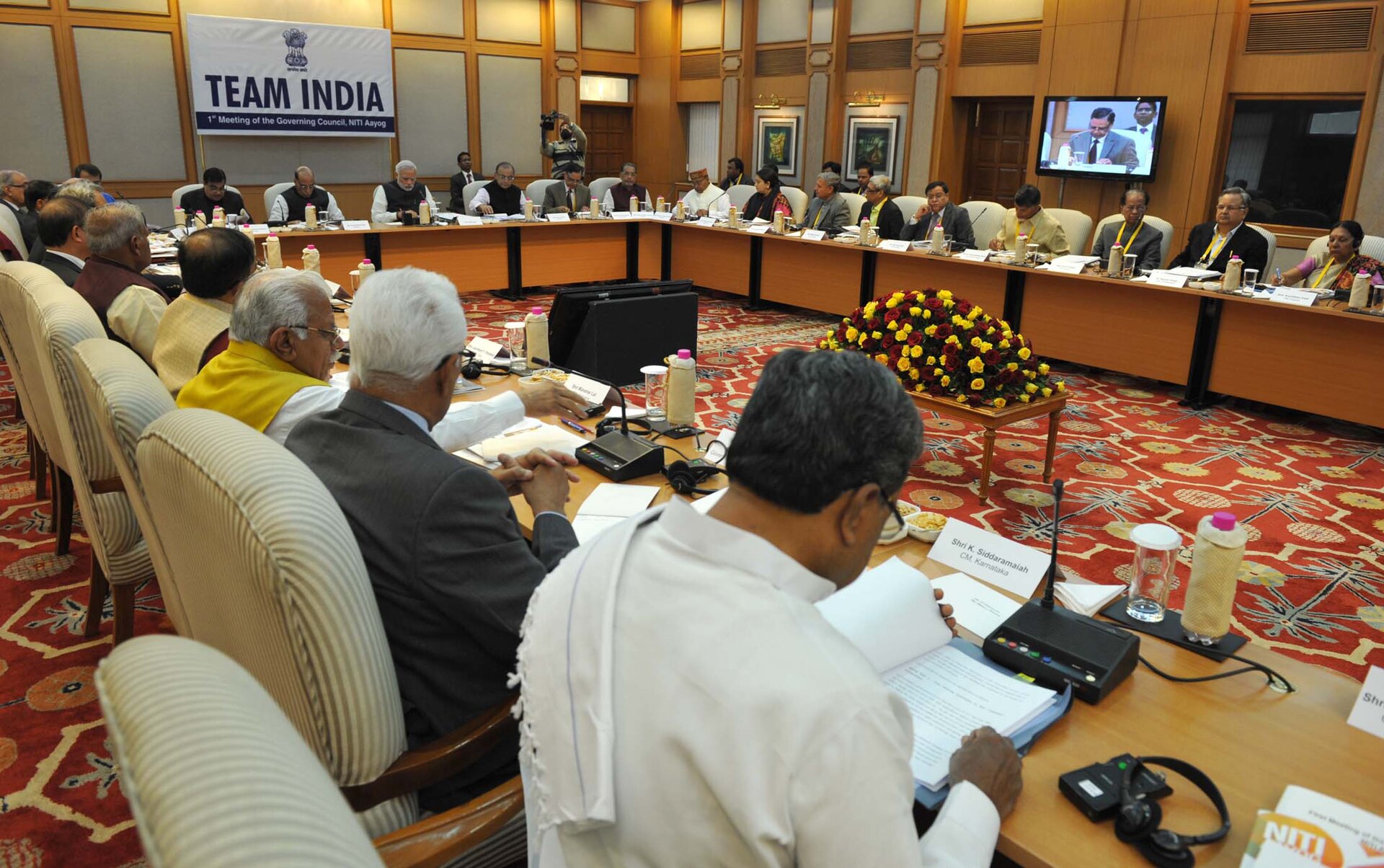
On August 6, 2026, NITI Aayog released a landmark report titled "Reimagining Care: Strategies for Empowering Caregivers in Viksit Bharat @2047." The report advocates for the establishment of a National Carer Council (NCC) to regulate, standardise, and professionalise caregiving services across India. This immediate policy development addresses the surging national need for formal care frameworks amidst changing demographic shifts, rapid urbanisation, and evolving economic structures.
Syllabus & Relevance
Prelims: Government reports, welfare schemes, and social sector initiatives.
GS-1: Salient features of Indian Society, Diversity of India, Social Empowerment, Population and Associated Issues, Poverty and Developmental issues.
Why it matters for India
India is undergoing a major demographic transition with an expanding elderly population, alongside rising female workforce participation and the erosion of traditional joint families.
Strengthening the care economy is vital for generating millions of formal care jobs, ensuring social protection for vulnerable groups such as senior citizens and Persons with Disabilities (PwDs), and achieving inclusive growth under Viksit Bharat @2047.
Static Foundation
According to the World Health Organisation, caregiving involves physical, emotional, and social support provided to individuals unable to perform daily activities independently due to age, illness, or disability.
Caregivers are categorized into formal caregivers (professionals providing non-medical personal care assistance) and informal caregivers (family members, friends, or volunteers).
The institutional foundation for caregiving in India has historically relied heavily on informal networks and private family responsibilities rather than structured public policy or formal sector regulations.
Data, Reports, Cases & Examples
Report Title: "Reimagining Care: Strategies for Empowering Caregivers in Viksit Bharat @2047" released by NITI Aayog in August 2026.
Market Valuation: The Indian care services market was valued at USD 29.62 billion in 2023.
Growth Projection: Projected to grow at a Compound Annual Growth Rate (CAGR) of 13.76 percent to reach USD 72.31 billion by 2030.
SHATAYU Dashboard: Launched during the National Workshop on “Creating a Well-Functioning Care Economy” in 2026 to support senior citizen caregiving.
JEEVAN Application: A citizen-facing mobile application serving as a single-window support ecosystem for senior citizens.
**State Initiative **in Odisha: Runs a 3-month certificate course under the Geriatric Caregiver **Training Programme **for physical and mental health support.
Prelims Quick Facts
NITI Aayog Report: Released "Reimagining Care: Strategies for Empowering Caregivers in Viksit Bharat @2047" advocating for a National Carer Council (NCC).
Definition of Caregiving: Physical, emotional, and social support for individuals unable to perform daily activities independently due to age, illness, or disability (WHO definition).
Formal vs Informal Caregivers: Formal caregivers (personal care aids providing non-medical assistance) versus informal caregivers (family members, friends, volunteers).
Market Size: Indian care services market valued at USD 29.62 billion in 2023, expected to reach USD 72.31 billion by 2030 at a CAGR of 13.76 percent.
SHATAYU Dashboard: Created to support and strengthen caregiving services for senior citizens nationwide.
JEEVAN Application: Single-window mobile application consolidating welfare schemes, senior citizen homes, and support services.
Vayo Manasa Sanjeevani: Initiative for spreading mental health awareness and online education for healthy ageing among elderly persons.
Odisha's Initiative: Geriatric Caregiver **Training Programme **featuring a 3-month certificate course.
Mains-only layer✍️ Open Mains Perspective & Answer FrameworkClick to expand ↓
Mains Perspective
Background
India is experiencing a rapid demographic transition marked by an expanding elderly population, urbanisation, and migration, which are systematically eroding traditional joint family structures. Nuclear families often lack informal support systems for dependent care. Concurrently, rising female workforce participation has amplified the demand for organised childcare and structured eldercare services.
Significance
Formalizing and investing in the care economy bridges critical economic and social gaps. It transforms unpaid care work into formal employment, absorbs a growing workforce, provides professional dignity to care providers, and secures reliable long-term support systems for senior citizens and Persons with Disabilities (PwDs).
India-specific Implications
Without a structured care policy, the burden of care falls overwhelmingly on women, reinforcing patriarchal traditions that treat care work as an unpaid private family duty. Addressing this helps harness the care sector as a major economic engine, matching projected market values of USD 72.31 billion by 2030.
Challenges and Criticisms
- Fiscal Constraints: Expanding care infrastructure and specialized staff training requires extensive long-term public funding.
- Social Attitudes: Entrenched patriarchal norms still perceive care work as a private domestic obligation rather than a public policy domain.
- Weak Regulatory Capacity: Administrative hurdles remain in monitoring and enforcing standard quality benchmarks across care institutions pan-India.
- Lack of Skilled Workforce: Severe shortage of trained personnel specialized in eldercare, disability care, and early childhood care.
Way Ahead
- Formulate a comprehensive National **Caregiving Policy **backed by an appropriate legal structure.
- Establish the National Carer Council as the apex regulatory authority for standardisation.
- Scale up carer training via robust public-private partnerships across all states.
- Integrate caregiving mechanisms with broader health, social protection, and skill development programs.
Answer Framework
Introduction: Define the care economy and introduce NITI Aayog's 2026 report ("Reimagining Care: Strategies for Empowering Caregivers in Viksit Bharat @2047") highlighting the push for a National Carer Council.
Body Dimensions:
- Drivers of Demand: Demographic aging, urbanisation, nuclear family breakdown, and rising female workforce participation.
- Current Initiatives: SHATAYU dashboard, JEEVAN app, Vayo Manasa Sanjeevani, and pioneering state interventions like Odisha's training course and Karnataka's carer allowance scheme.
- Structural Bottlenecks: Fiscal limitations, deep-rooted social attitudes, weak regulatory oversight, and skilled workforce shortages
Conclusion
Emphasize the way forward through a National Caregiving Policy, public-private training models, and integration with national health and skilling frameworks to fulfill Viksit Bharat @2047 goals.
Possible Mains Question
Examine the significance of the care economy in the context of India's demographic transition. Discuss the key challenges in caregiving reforms and suggest measures to formalise the care workforce.