Locate the place
 India
India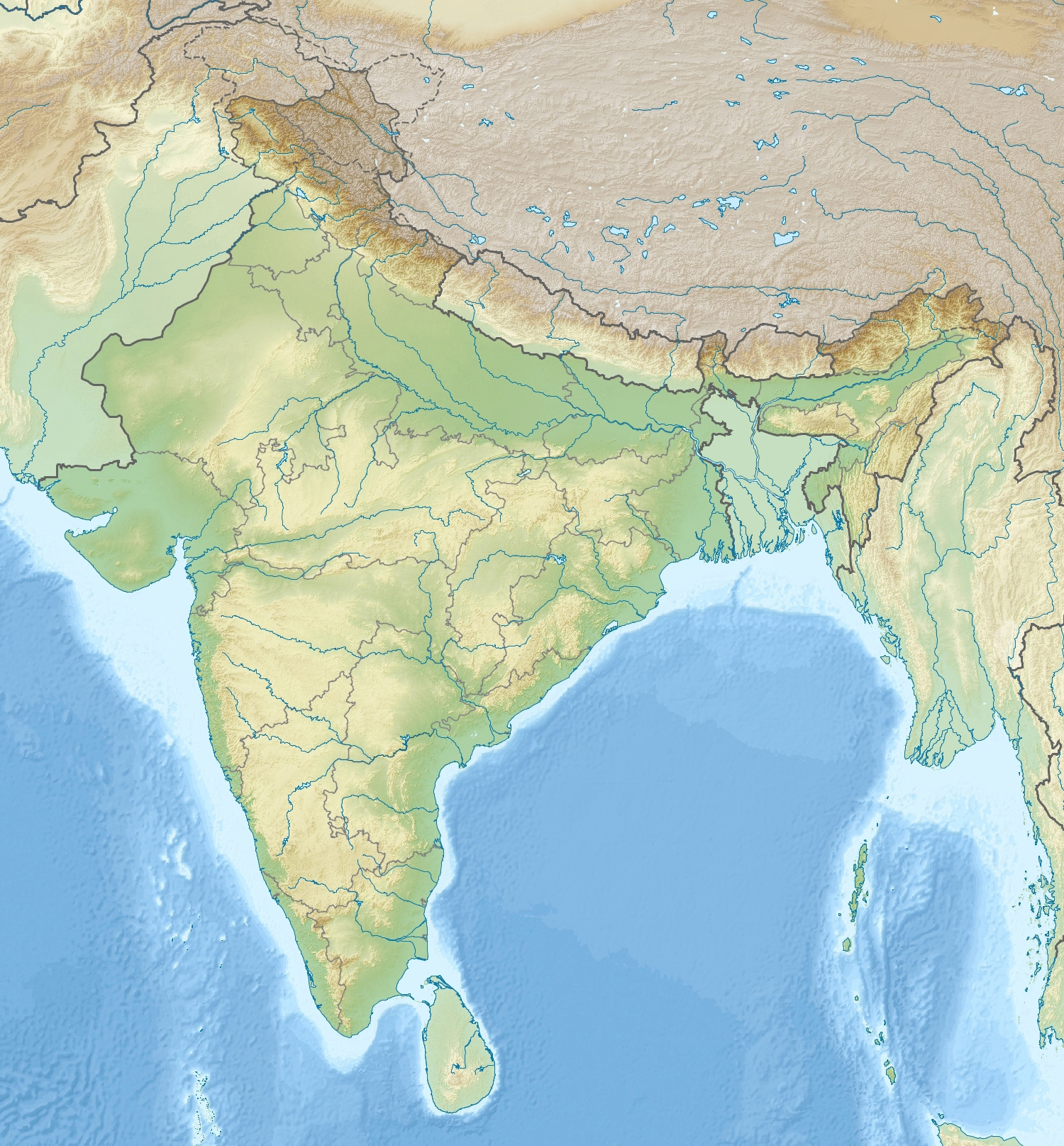 India
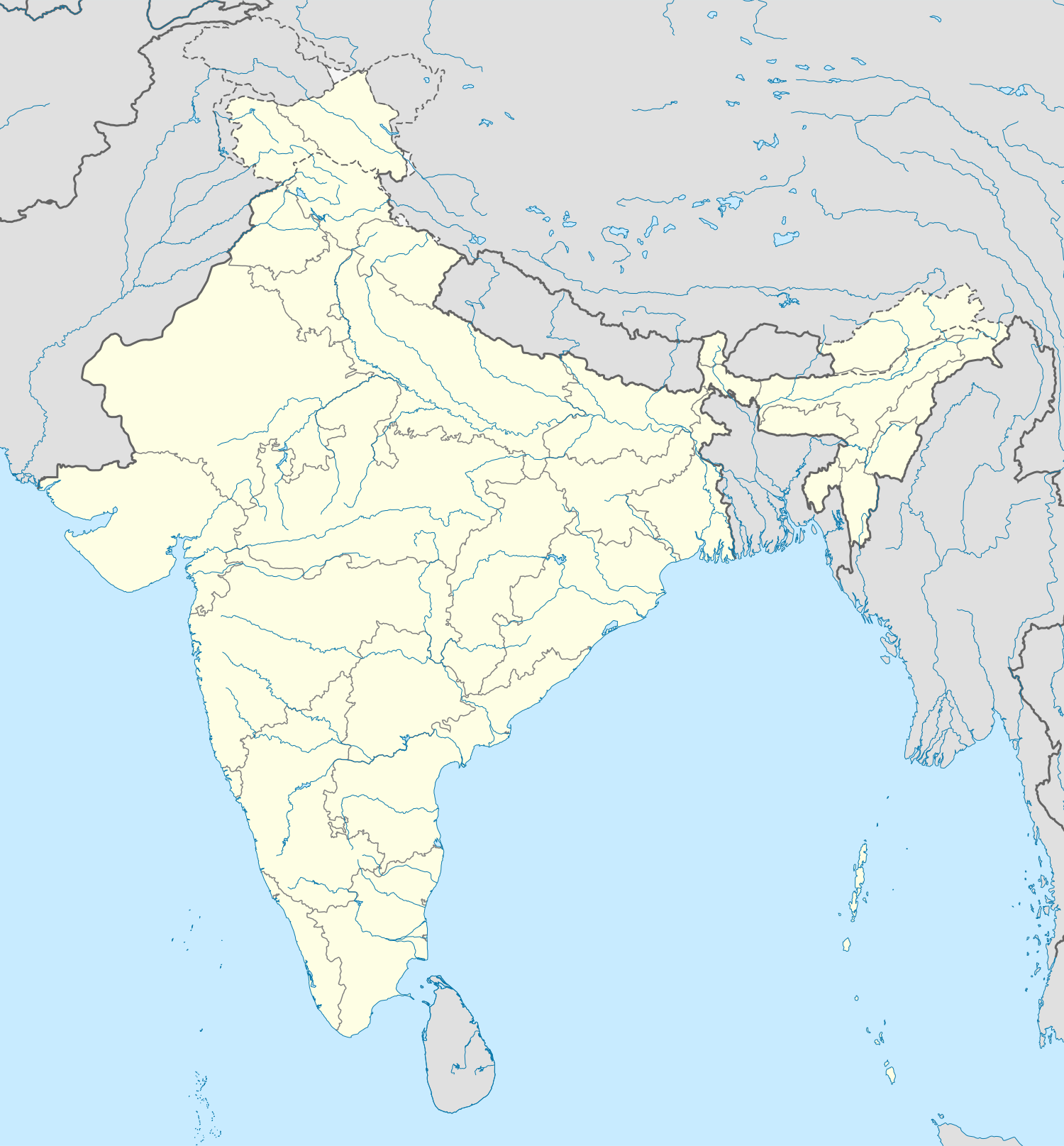
IndiaMarker uses stored geographic coordinates on equirectangular location-map bounds. India map bases: Wikimedia Commons / Uwe Dedering (CC BY-SA 3.0). World political base: public domain; physical world base: Gundan (CC BY-SA 4.0).
📌 Why in News?
SC Extends 10 km Mining Buffer Rule to Wetland Reserves Across India Recently, the Supreme Court orally clarified that its earlier directions regulating mining near the Asan Wetland Conservation Reserve could, for the sake of parity, apply to other wetland and community conservation reserves across India. Asan Mining Restriction: Under its interim order in February 2024, the Court has directed that no mining should take place within a 10-km radius of the Asan reserve without prior permission from the Standing Committee of the National Board for Wildlife and/or the Ministry of Environment, Forest and Climate Change.
Syllabus & Relevance
Prelims: Environment — institutions, terminology and factual features connected with the development.
Mains: GS-3 — contemporary application of the relevant syllabus theme.
Current–static link: Revise the underlying institution, policy or concept together with this development.
Why it matters for India
SC Extends 10 km Mining Buffer Rule to Wetland Reserves Across India Recently, the Supreme Court orally clarified that its earlier directions regulating mining near the Asan Wetland Conservation Reserve could, for the sake of parity, apply to other wetland and community conservation reserves across India.
Static Foundation
Asan Mining Restriction: Under its interim order in February 2024, the Court has directed that no mining should take place within a 10-km radius of the Asan reserve without prior permission from the Standing Committee of the National Board for Wildlife and/or the Ministry of Environment, Forest and Climate Change.
Himachal Pradesh’s Plea: The State argued that the restriction should not apply because the Asan reserve lies in Uttarakhand and wetland reserves do not necessarily require external buffer zones.
SC’s Direction: The Court directed the Standing Committee of the National Board for Wildlife or the Environment Ministry to determine whether the Asan wetland extends into Himachal Pradesh.
If it does, the 2024 directions would apply there; otherwise, mining proposals would be decided under the applicable legal framework.
About Asan Wetland: The Asan Wetland Conservation Reserve lies at the confluence of the Asan and Yamuna rivers in Uttarakhand.
It supports migratory waterbirds and aquatic biodiversity and was designated a Ramsar site in 2020.
No statutory Ramsar Buffer: Neither the Ramsar Convention nor the Wetlands (Conservation and Management) Rules, 2017 prescribes a fixed buffer around Ramsar sites or expressly prohibits mining within a specified distance.
Data, Reports, Cases & Examples
SC Extends 10 km Mining Buffer Rule to Wetland Reserves Across India
Recently, the Supreme Court orally clarified that its earlier directions regulating mining near the Asan Wetland Conservation Reserve could, for the sake of parity, apply to other wetland and community conservation reserves across India.
Asan Mining Restriction: Under its interim order in February 2024, the Court has directed that no mining should take place within a 10-km radius of the Asan reserve without prior permission from the Standing Committee of the National Board for Wildlife and/or the Ministry of Environment, Forest and Climate Change.
SC’s Direction: The Court directed the Standing Committee of the National Board for Wildlife or the Environment Ministry to determine whether the Asan wetland extends into Himachal Pradesh.
If it does, the 2024 directions would apply there; otherwise, mining proposals would be decided under the applicable legal framework.
It supports migratory waterbirds and aquatic biodiversity and was designated a Ramsar site in 2020.
Prelims Quick Facts
SC Extends 10 km Mining Buffer Rule to Wetland Reserves Across India
Recently, the Supreme Court orally clarified that its earlier directions regulating mining near the Asan Wetland Conservation Reserve could, for the sake of parity, apply to other wetland and community conservation reserves across India.
Asan Mining Restriction: Under its interim order in February 2024, the Court has directed that no mining should take place within a 10-km radius of the Asan reserve without prior permission from the Standing Committee of the National Board for Wildlife and/or the Ministry of Environment, Forest and Climate Change.
Himachal Pradesh’s Plea: The State argued that the restriction should not apply because the Asan reserve lies in Uttarakhand and wetland reserves do not necessarily require external buffer zones.
SC’s Direction: The Court directed the Standing Committee of the National Board for Wildlife or the Environment Ministry to determine whether the Asan wetland extends into Himachal Pradesh.
If it does, the 2024 directions would apply there; otherwise, mining proposals would be decided under the applicable legal framework.
About Asan Wetland: The Asan Wetland Conservation Reserve lies at the confluence of the Asan and Yamuna rivers in Uttarakhand.
It supports migratory waterbirds and aquatic biodiversity and was designated a Ramsar site in 2020.
Mains-only layer✍️ Open Mains Perspective & Answer FrameworkClick to expand ↓
Mains Perspective
Background and key dimensions
- SC’s Direction: The Court directed the Standing Committee of the National Board for Wildlife or the Environment Ministry to determine whether the Asan wetland extends into Himachal Pradesh.
- If it does, the 2024 directions would apply there; otherwise, mining proposals would be decided under the applicable legal framework.
- About Asan Wetland: The Asan Wetland Conservation Reserve lies at the confluence of the Asan and Yamuna rivers in Uttarakhand.
- It supports migratory waterbirds and aquatic biodiversity and was designated a Ramsar site in 2020.
- No statutory Ramsar Buffer: Neither the Ramsar Convention nor the Wetlands (Conservation and Management) Rules, 2017 prescribes a fixed buffer around Ramsar sites or expressly prohibits mining within a specified distance.
- Changes under the 2017 Rules: The 2017 Rules replaced the earlier framework with a decentralised system led by State Wetland Authorities.
- They removed the detailed list of prohibited activities in the 2010 Rules and gave States greater responsibility for wetland regulation.
- However, the constitutional validity of the 2017 Rules is under challenge before the Supreme Court.
- Comparison with Other Protected Areas: Mining is prohibited within national parks and wildlife sanctuaries and, under Supreme Court directions, within one kilometre of their boundaries unless a larger notified Eco-Sensitive Zone applies.
- Mining on forest land also requires prior Central approval under the Forest Conservation Act 1980, and is generally subject to environmental clearance under the Environment Impact Assessment Notification, 2006.
- Environment BufferZone WetlandConservation The Supreme Court clarified that a mining ban within a 10 km radius of the Asan wetland in Uttarakhand applies nationwide to wetland reserves.
- Himachal Pradesh contested this, but a determination will be made by environmental authorities.
Analytical use
- Connect the development with its institutional, policy, economic, social, environmental or security implications only where supported above.
- In a Mains answer, separate the verified development from broader evaluation and use the named evidence precisely.
Way forward
- Base recommendations on the gaps and institutional responsibilities identified in the source-grounded points.
Answer Framework
Introduction
Begin with the immediate development and identify the central institution or policy issue.
Body
- Explain the relevant static concept.
- Present the principal source-backed facts.
- Analyse significance for India and the syllabus theme.
- Discuss supported challenges or implementation gaps.
- Use one named law, report, institution, date or example from the evidence box.
Conclusion
End with a balanced, institutionally feasible way forward without making claims beyond the available evidence.
Possible Mains Question
Examine the significance of “SC Extends 10 km Mining Buffer Rule to Wetland Reserves Across India”. Discuss its key implications and the way forward.