Locate the place
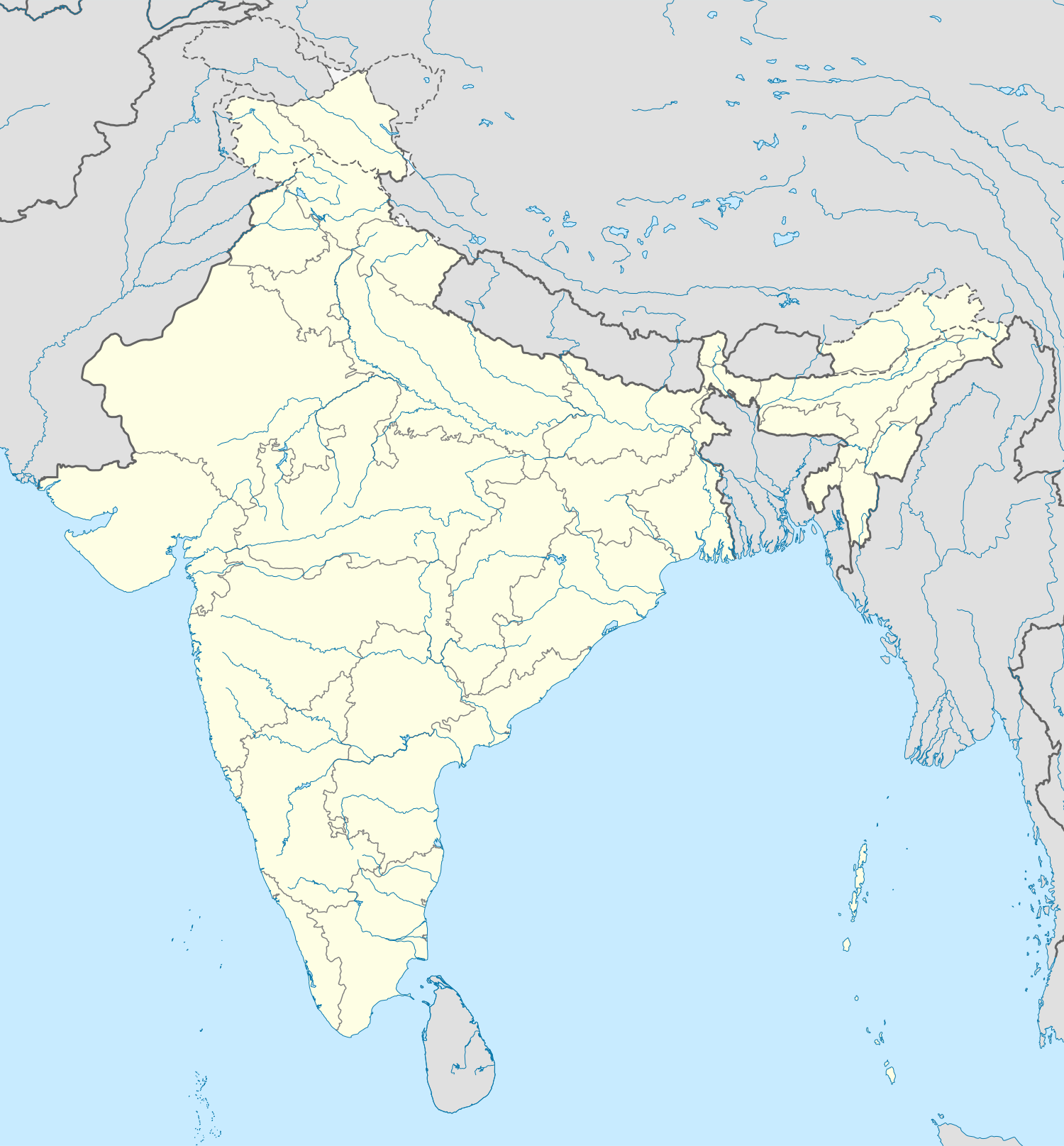 DehradunUttarakhand
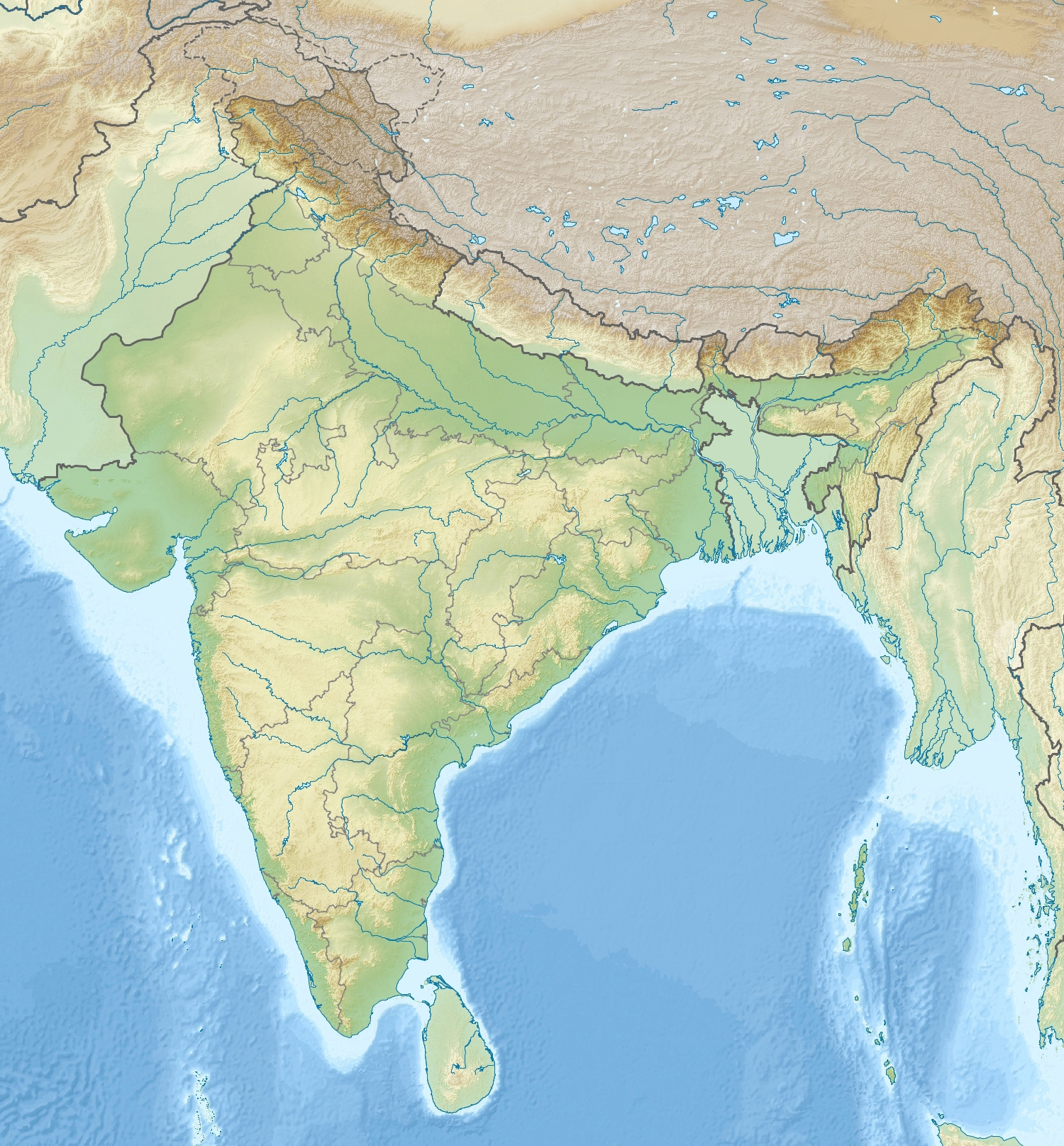 Uttarakhand
Marker uses stored geographic coordinates on equirectangular location-map bounds. India map bases: Wikimedia Commons / Uwe Dedering (CC BY-SA 3.0). World political base: public domain; physical world base: Gundan (CC BY-SA 4.0).
📌 Why in News?
The Supreme Court of India has clarified that its judicial directive requiring prior approval for any mining activities within a 10-kilometer radius of the Asan Wetland Conservation Reserve will now apply nationwide to all wetland conservation reserves across the country. This significant ruling transforms a site-specific environmental directive into a universal requirement across India, establishing uniform judicial safeguards to protect vulnerable wetland ecosystems from degradation caused by unchecked mining and industrial activity. By broadening the geographical scope of the buffer requirement, the apex court aims to reinforce environmental jurisprudence and prevent ecological damage near officially designated conservation reserves.
Syllabus & Relevance
Prelims: General Science - Ecology, Biodiversity, and Ramsar Sites; Mains: GS Paper III - Conservation, Environmental Pollution and Degradation, Environmental Impact Assessment.
Why it matters for India
This directive creates a binding, standardized ecological buffer for all wetland conservation reserves in India, directly affecting mining lease approvals, industrial development projects, and resource extraction near ecologically sensitive zones across states.
It mandates central and state mining authorities to submit proposals within the 10-km zone to rigorous judicial oversight, ensuring that economic activities do not compromise critical wetland hydrology and biodiversity.
Static Foundation
Wetlands are vital ecosystems providing hydrological regulation, flood control, water purification, and biodiversity support.
Under the Ramsar Convention on Wetlands (1971), signatory nations commit to maintaining the ecological character of designated wetlands of international importance.
In India, wetlands are protected under the Wetlands (Conservation and Management) Rules, 2017, and designated conservation reserves under the Wildlife Protection Act, 1972.
The Supreme Court's precautionary approach relies on the Precautionary Principle and the Doctrine of Public Trust under Article 21 (Right to a Clean Environment) of the Constitution of India.
Data, Reports, Cases & Examples
Supreme Court Order: Mandatory prior judicial approval for mining operations within a 10 km radius extended from Asan Wetland to all wetland conservation reserves nationwide.
Asan Wetland Conservation Reserve: Situated in Dehradun district, Uttarakhand; declared as Uttarakhand's first Ramsar site in October 2020.
Buffer Distance: 10 km restriction zone establishing prior clearance requirement for mining activities.
Prelims Quick Facts
Apex Court Ruling: The Supreme Court expanded its prior approval mandate for mining within 10 km of the Asan Wetland Conservation Reserve to all wetland conservation reserves across India.
Asan Conservation Reserve: Located at the confluence of the Yamuna and Asan rivers in Uttarakhand, recognized as a Ramsar site.
Scope of Restriction: Requires prior clearance for any mining or quarrying activity falling within a 10 km radial distance from protected wetland conservation reserves.
Ecological Purpose: Designed to protect wetland hydrology, migratory bird flyways, and water quality from dust, runoff, and groundwater depletion caused by mining.
Judicial Safeguard: Ensures uniform application of environmental rules nationwide, removing ambiguity among different state mining boards.
Ramsar Convention Context: India currently hosts a growing network of Ramsar sites where wise use and strict conservation principles apply.
Legal Mechanism: Operates under the umbrella of environmental protection statutes and constitutional public trust doctrines.
Trap 1: Mining within 10 km is completely banned. (Fact: The court mandate requires prior judicial approval/clearance, not an absolute blanket ban.)
Mains-only layer✍️ Open Mains Perspective & Answer FrameworkClick to expand ↓
Mains Perspective
Background
In response to concerns regarding heavy mining and extraction activities operating near fragile wetland habitats, the Supreme Court issued a specific order concerning the Asan Wetland Conservation Reserve in Uttarakhand, requiring mining operators within a 10 km radius to obtain prior judicial clearance. To ensure regulatory parity and avoid state-level legal loopholes, the court clarified that this requirement applies universally across all wetland conservation reserves in India.
Significance
-
Standardized Judicial Oversight: Eliminates fragmented regional protections by instituting a single, enforceable buffer policy across all Indian states.
-
Precautionary Protection: Safeguards sensitive avian corridors, aquatic habitats, and local hydrogeology from siltation, toxic runoff, and structural alteration caused by nearby mining.
-
Strengthening Public Trust: Reaffirms the judiciary's role as a custodian of natural resources under Article 21.
India-specific Implications
-
Impact on Mining Leases: State geological and mining departments must align lease clearances with prior judicial approval mandates within the 10 km boundary.
-
State Compliance: Ensures that state authorities cannot grant unilateral environmental clearances or waivers near protected wetland reserves.
Challenges and Criticisms
-
Implementation Bureaucracy: Increases regulatory compliance stages for existing and proposed mining projects, potentially delaying industrial permissions.
-
Boundary Ambiguities: Demarcation of exact 10 km buffer perimeters around non-rigid wetland margins requires clear spatial mapping and GIS integration.
Way Forward
-
GIS Boundary Mapping: High-resolution mapping of all wetland conservation reserve buffer zones to avoid procedural delays for lawful industries.
-
Streamlined Clearances: Establishing transparent evaluation protocols for prior approval to balance sustainable development with strict ecological preservation.
Answer Framework
Introduction
Define the recent Supreme Court ruling mandating prior approval for mining within 10 km of all wetland conservation reserves nationwide, building upon the precedent set by the Asan Wetland case.
Body Dimensions
-
Ecological Necessity: Discuss the impact of mining on wetland hydrology, biodiversity, and migratory bird habitats.
-
Judicial Uniformity: Explain how extending the rule nationwide prevents regulatory arbitrage across different states.
-
Economic & Compliance Impact: Analyze challenges faced by the mining sector and local regulatory bodies in managing prior approvals.
Conclusion
Conclude by emphasizing the need for robust spatial mapping (GIS) and transparent impact assessment mechanisms to harmonize industrial growth with wetland conservation.
Possible Mains Question
Examine the significance of the Supreme Court's directive extending the requirement of prior approval for mining within a 10-km radius of Asan Wetland to all wetland conservation reserves in India. How does this decision balance environmental protection with economic activities?