International Relations
India urged to formalise Arctic policy amid global interest in region
What happened
India must develop a clear and formal Arctic policy to secure its strategic, scientific and economic interests as global powers increasingly focus on the resource-rich region. Experts warn that without a cohesive approach, the country risks missing opportunities in climate research, shipping routes and mineral exploration.
India
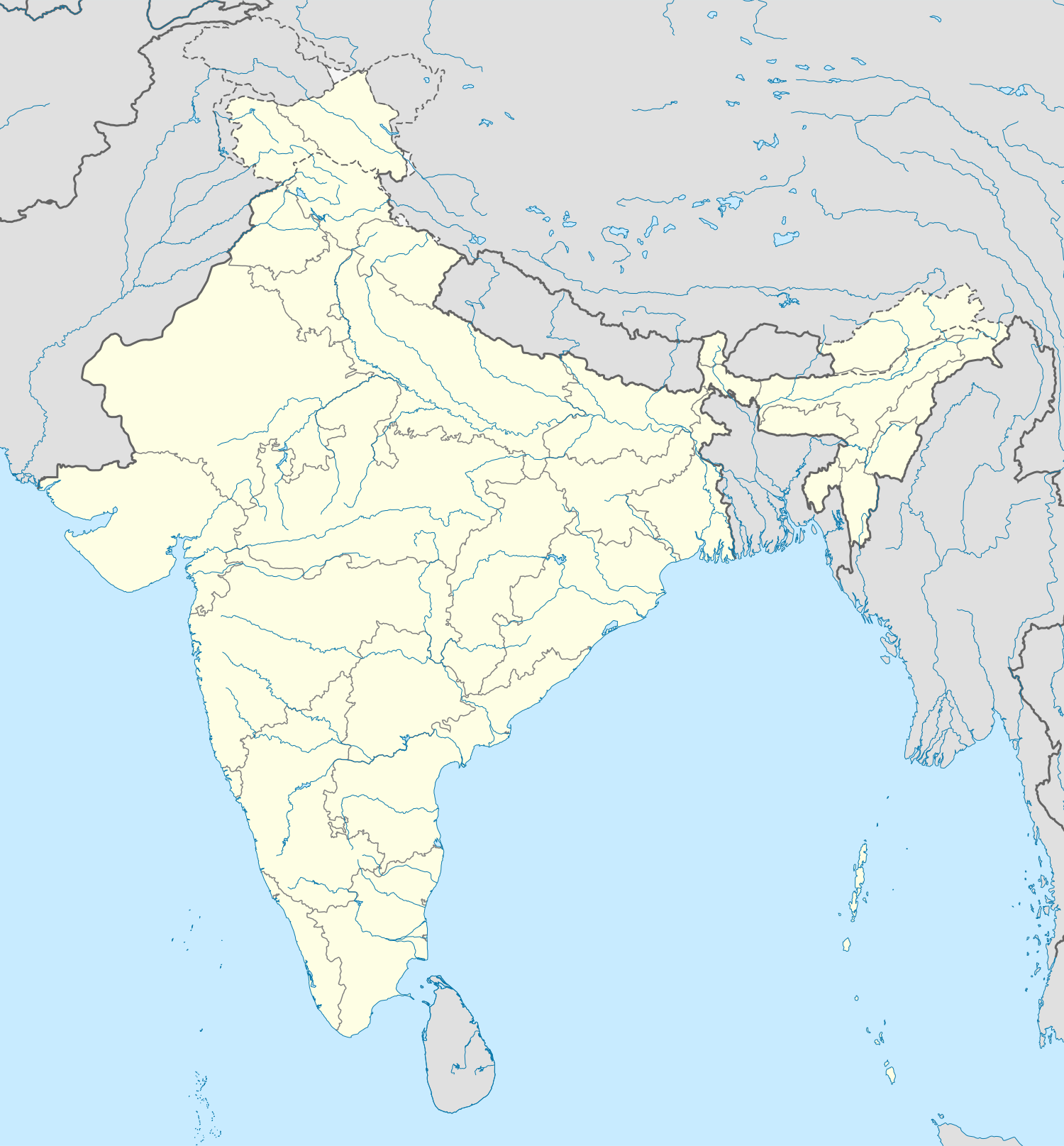 India
IndiaKey facts
India’s Arctic research station Himadri operates in Ny-Ålesund, Svalbard, under a bilateral agreement with Norway.
The Northern Sea Route could cut shipping distances between Europe and Asia by up to 40%, reducing transit times and costs.
China operates two research stations in the Arctic and has declared itself a “near-Arctic state,” despite lacking territorial claims.
The Arctic Council includes indigenous groups as permanent participants, alongside eight member states and 13 observer countries.
India’s 2021 Arctic Policy draft remains informal, lacking legislative or executive approval.
Context
- The Arctic region is warming at three times the global average, accelerating ice melt and opening new shipping lanes.
- Eight Arctic states (Canada, Denmark, Finland, Iceland, Norway, Russia, Sweden, and the U.S.) hold territorial claims, while non-Arctic states like China, India, and Japan are increasing their presence.
- India established its first Arctic research station, Himadri, in 2008 at Ny-Ålesund, Svalbard (Norway).
- The Arctic Council, founded in 1996, is the primary intergovernmental forum for Arctic issues, though it excludes military discussions.
Why it matters
- India’s scientific research stations in the Arctic, such as Himadri, require policy backing to sustain long-term operations.
- The Northern Sea Route could reduce shipping costs for trade between Europe and Asia, benefiting India’s economy.
- Climate change impacts in the Arctic affect monsoon patterns in South Asia, directly influencing India’s agriculture and water security.
- A formal policy would align India’s engagement with global frameworks like the Arctic Council, enhancing its diplomatic standing.