Economy
Indian rupee weakens as global oil prices rise on Hormuz Strait uncertainty
The development
What happened
The Indian rupee fell against the US dollar on August 12, 2026, as rising global oil prices added pressure to the currency. Traders cited uncertainty over the reopening of the Strait of Hormuz, a critical oil shipping route, as a key factor driving volatility in energy markets.
Map focus
26.60°, 56.30° · maps only where geography mattersStrait of Hormuz
FocusStrait of Hormuz
World locator
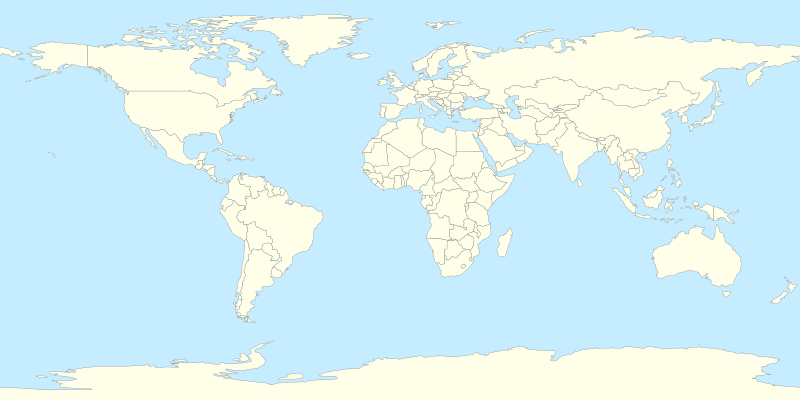 Strait of Hormuz
India context
IndiaStrait of HormuzRegional countries
IranSaudi ArabiaAfghanistanPakistanStrait of HormuzNearby: Iran · Saudi Arabia · Afghanistan · Pakistan
At a glance
Key facts
The Indian rupee weakened to 83.95 per US dollar on August 12, 2026, compared to 83.80 in the previous session.
Global benchmark Brent crude oil prices rose by 3.2% to $82.45 per barrel amid Hormuz Strait concerns.
Traders reported increased volatility in currency and commodity markets due to uncertainty over the strait’s reopening timeline.
The Reserve Bank of India has previously intervened in forex markets to curb excessive rupee depreciation.
Background
Context
- The Strait of Hormuz is a narrow waterway between Oman and Iran, through which about 20% of the world’s oil supply passes daily.
- Geopolitical tensions in the region often lead to supply disruptions, causing spikes in global oil prices.
- India is the world’s third-largest oil importer, relying heavily on crude imports to meet domestic demand.
Significance
Why it matters
- Higher oil prices increase India’s import bill, potentially widening the trade deficit and adding inflationary pressure.
- A weaker rupee raises costs for imported goods, including fuel, which could impact household budgets and industrial production.
- The Reserve Bank of India may need to intervene to stabilize the currency, affecting liquidity and interest rate policies.