Locate the place
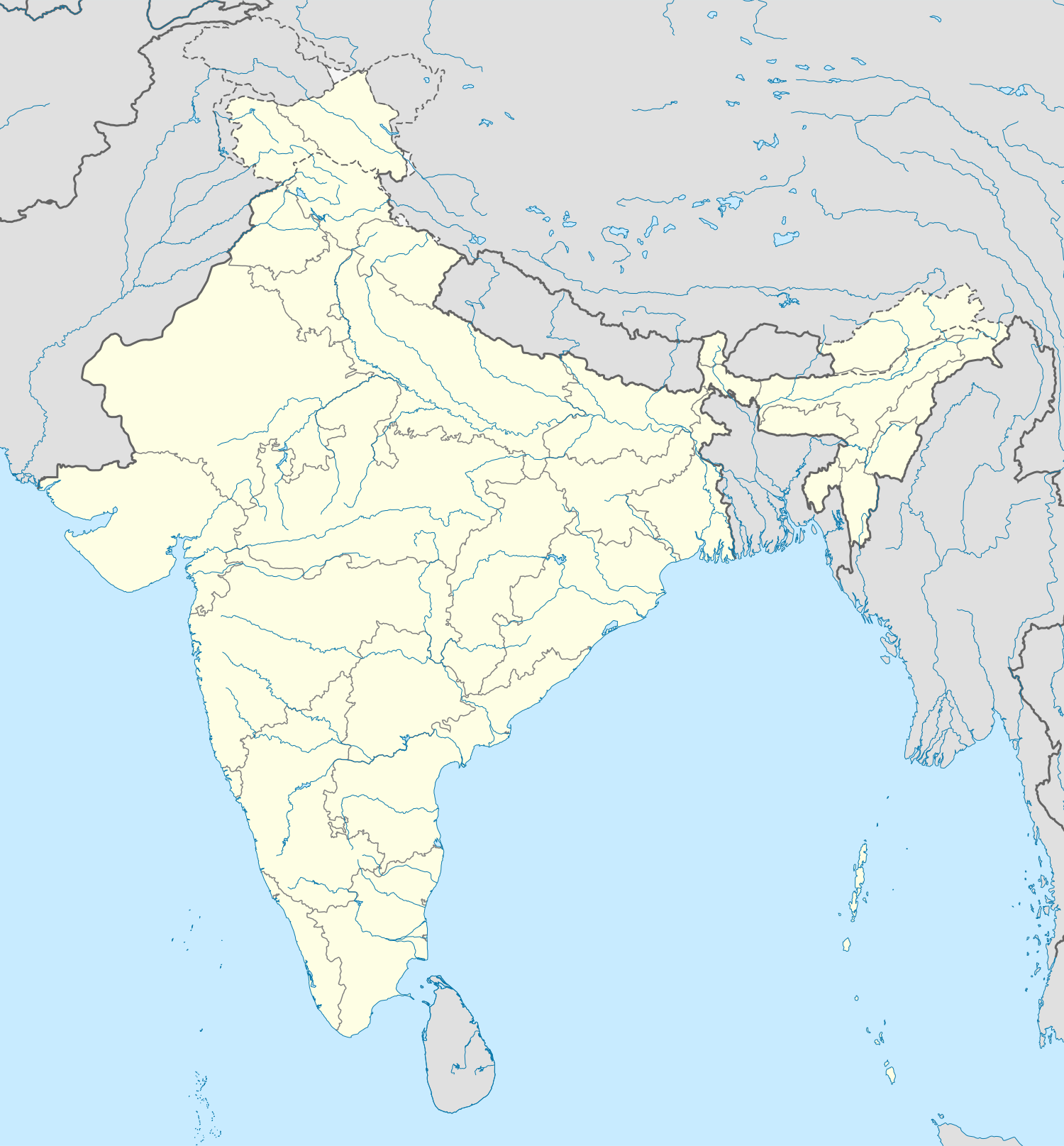 LehLadakh
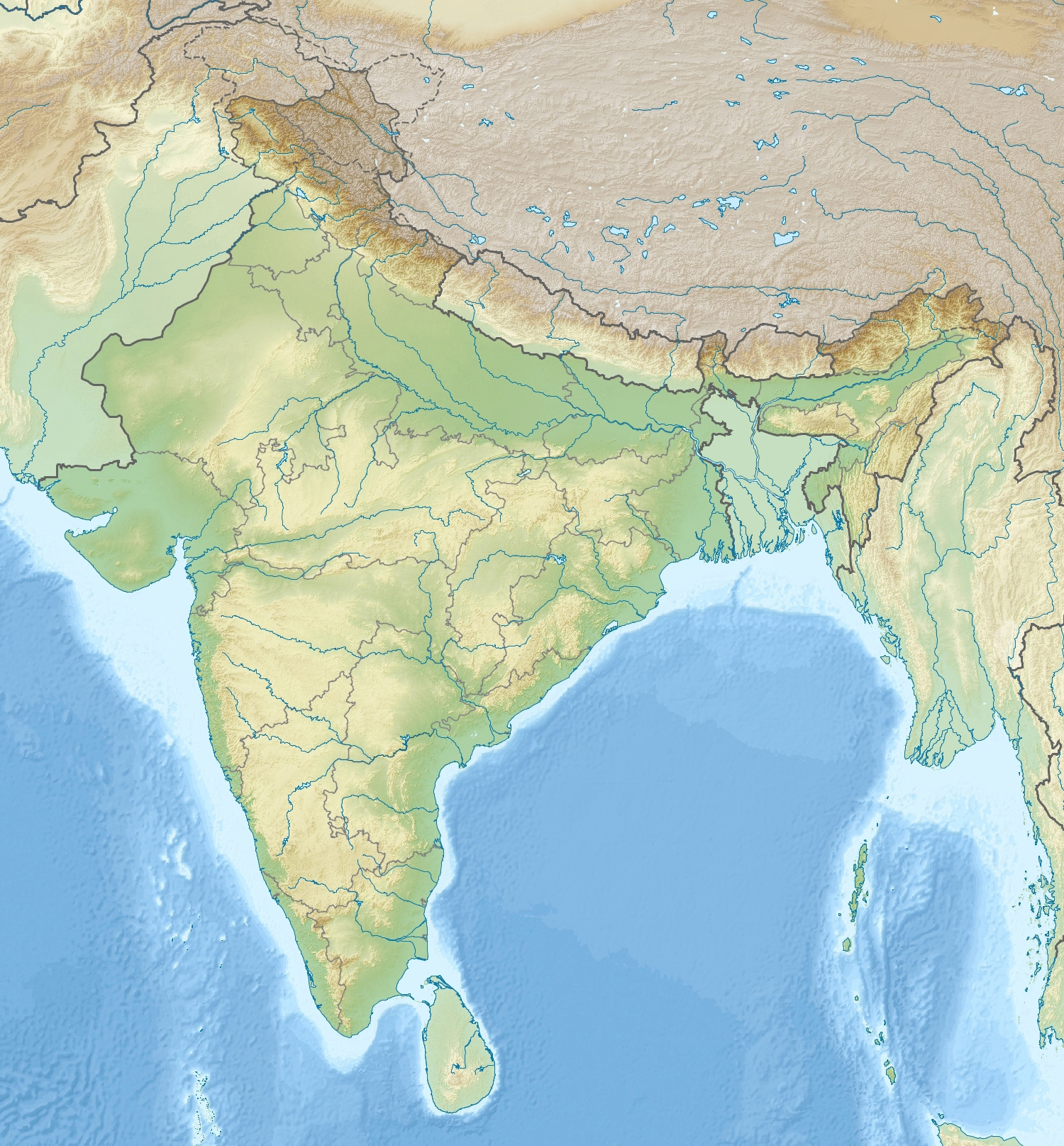 Ladakh
Marker uses stored geographic coordinates on equirectangular location-map bounds. India map bases: Wikimedia Commons / Uwe Dedering (CC BY-SA 3.0). World political base: public domain; physical world base: Gundan (CC BY-SA 4.0).
📌 Why in News?
Ladakh is set to become the first region in independent India to enumerate caste as part of a regular decennial exercise in Census 2027. Classified as a 'snow-bound non-synchronous area' alongside other high-altitude regions, Ladakh's door-to-door survey begins months ahead of the rest of the country due to severe winter weather that makes the standard February enumeration window impossible. The overall Census 2027 will feature a 40-question schedule, utilize both digital and paper forms due to local security concerns, and run both its houselisting and population enumeration phases between April 1, 2026, and February 28, 2027.
Syllabus & Relevance
Prelims: Demography, Census Act of 1948, and the history of population enumeration.
GS-2: Welfare schemes for vulnerable sections; mechanisms, laws, institutions, and bodies constituted for the protection and betterment of these sections.
Current-Static Link: Connecting contemporary demands for a caste census with Articles 16(4) and 340, the 1931 historical precedent, and the administrative anomalies of the 2011 SECC.
Why it matters for India
This initiative provides the first empirical, nationwide, caste-wise demographic data since 1931.
It directly impacts the formulation of reservation policies, judicial scrutiny of affirmative action, and the design of targeted socio-economic development programs by replacing outdated projections with precise, current data.
Static Foundation
Constitutional Framework: Article 16(4) permits state reservation in public employment for backward classes, while Article 340 allows for commissions (like the Mandal Commission) to investigate backward class conditions.
Statutory Basis: The national census is conducted under **the Census **Act of 1948, which legally empowers the Central Government and ensures data confidentiality.
Executive Authority: The Office of the Registrar General **and Census **Commissioner of India, under the Ministry of Home Affairs, is the nodal agency for conducting the census.
Historical Precedent: Decennial population counts began in 1871, with the first synchronous census conducted in 1881. The 1931 Census was the last to publish comprehensive caste-wise numbers.
Post-Independence Shift: After 1947, India opted to enumerate only Scheduled Castes (SCs) and Scheduled Tribes (STs) in regular censuses to prevent the institutionalization of caste identities.
Socio-Economic Caste Census (SECC) 2011: The first post-independence caste survey, which was conducted outside the regular census framework and remained unpublished due to severe data anomalies and classifications inconsistencies.
Data, Reports, Cases & Examples
1931: The year of the last published, comprehensive caste-based census data in India, which remains the default reference for OBC population estimates.
2011: The year of the Socio-Economic Caste Census (SECC), whose caste data was never published by the government due to anomalies.
2023: The year Bihar successfully conducted and published its state-level caste-based survey.
April 1, 2026 to February 28, 2027: The operational window for executing both phases of Census 2027 (houselisting and population enumeration).
40: The exact number of questions planned for the Census 2027 questionnaire.
HLB (Houselisting Block): The unit within which digital layout maps and geo-tagging will be deployed to eliminate manual paper mapping errors.
Prelims Quick Facts
Snow-bound non-synchronous areas: High-altitude regions like Ladakh surveyed months in advance because extreme winter weather prevents door-to-door enumeration during the standard February window.
Census Act, 1948: The legal framework governing the census; it guarantees confidentiality of individual data.
Registrar General and Census Commissioner of India: The central agency responsible for planning, executing, and publishing census data.
Open-column methodology: Used in Census 2027 to record self-reported caste names, which must later be cleaned and standardized.
Hybrid Mode: Census 2027 will accommodate both digital applications and paper schedules to counter local security and connectivity challenges.
Prelims Trap: A statement might claim that Census 2027 is India's first-ever attempt to collect caste data after 1947. Correction: The Socio-Economic Caste Census (SECC) was conducted in 2011, but its caste findings were never publicly released.
Prelims Trap: A statement might assert that **the Census **is conducted by the Ministry of Statistics **and Programme **Implementation (MoSPI). Correction: It is conducted by the Office of the Registrar General **and Census **Commissioner under the Ministry of Home Affairs.
Mains-only layer✍️ Open Mains Perspective & Answer FrameworkClick to expand ↓
Mains Perspective
Background
Historically, India's decennial census counted all castes up to 1931. Post-independence, the policy shifted to enumerating only SCs and STs under **the Census **Act of 1948. While the Socio-Economic Caste Census (SECC) was attempted in 2011, its data remained unpublished due to massive spelling, nomenclature, and classification anomalies. This left policymakers relying on 1931 projections or expert estimates for designing affirmative policies.
Significance
- Empirical Basis for Affirmative Action: It offers updated, legally-defensible data to support reservation quotas, satisfying judicial demands for quantifiable data under Articles 16(4) and 340.
- Targeted Welfare Delivery: It helps map the socio-economic disparities of backward communities, enabling precise budgetary allocation and welfare interventions.
- Modernized Methods: Employs digital layout mapping and geo-tagging at the Houselisting Block (HLB) level, shifting away from error-prone paper schedules.
India-specific Implications
For a diverse and stratified society like India, caste data acts as a tool for political empowerment and resource accountability. However, it also re-centers caste as the primary identity marker, influencing electoral strategies and regional mobilization, as seen after the Bihar 2023 caste survey.
Challenges and Criticisms
- Standardization Dilemma: Converting millions of open-ended, self-reported caste responses into clean, classified data is highly complex.
- Deepening Social Fault Lines: Critics argue that caste enumeration may reinforce caste consciousness, promote identity politics, and trigger demands for increased reservation caps.
- Administrative & Security Hurdles: Operating in rugged, non-synchronous regions like Ladakh requires mixed-mode (paper and digital) schedules due to local security risks and rugged terrain.
Way Forward
To ensure success, the government must build a robust, transparent, and automated data-cleaning framework to standardize the open-column entries. Standardizing classifications without political bias while ensuring data privacy is critical to transforming Census 2027 from a divisive exercise into a tool for inclusive, evidence-based development.
Answer Framework
An ideal answer should start with an Introduction defining the significance of Census 2027 and Ladakh's unique role as a non-synchronous area initiating independent India's first integrated caste enumeration. The Body should be divided into three dimensions: first, the administrative and technological modernization (digital layout maps, geo-tagging, 40-question schedule); second, the arguments favoring caste enumeration (empirical backing for Articles 16(4) and 340, targeted welfare, addressing the limitations of 1931 projections); and third, the structural challenges (cleaning open-column data, risk of caste fragmentation, and security challenges requiring hybrid paper/digital forms). The Conclusion should emphasize the transition from 'expert assessments' to objective data, stating that a scientifically processed census can balance social justice with national integration.
Possible Mains Question
Evaluate the administrative, political, and socio-economic implications of introducing caste enumeration in Census 2027. How does the integration of digital technology address the challenges faced during the 2011 Socio-Economic Caste Census?