United States
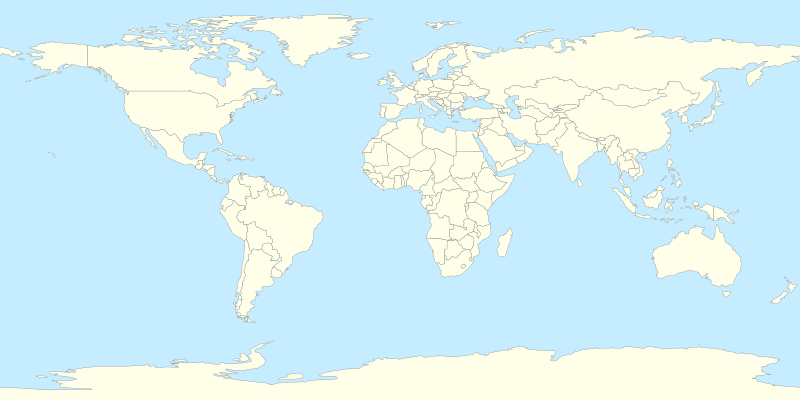 United StatesCanadaMexicoUnited States
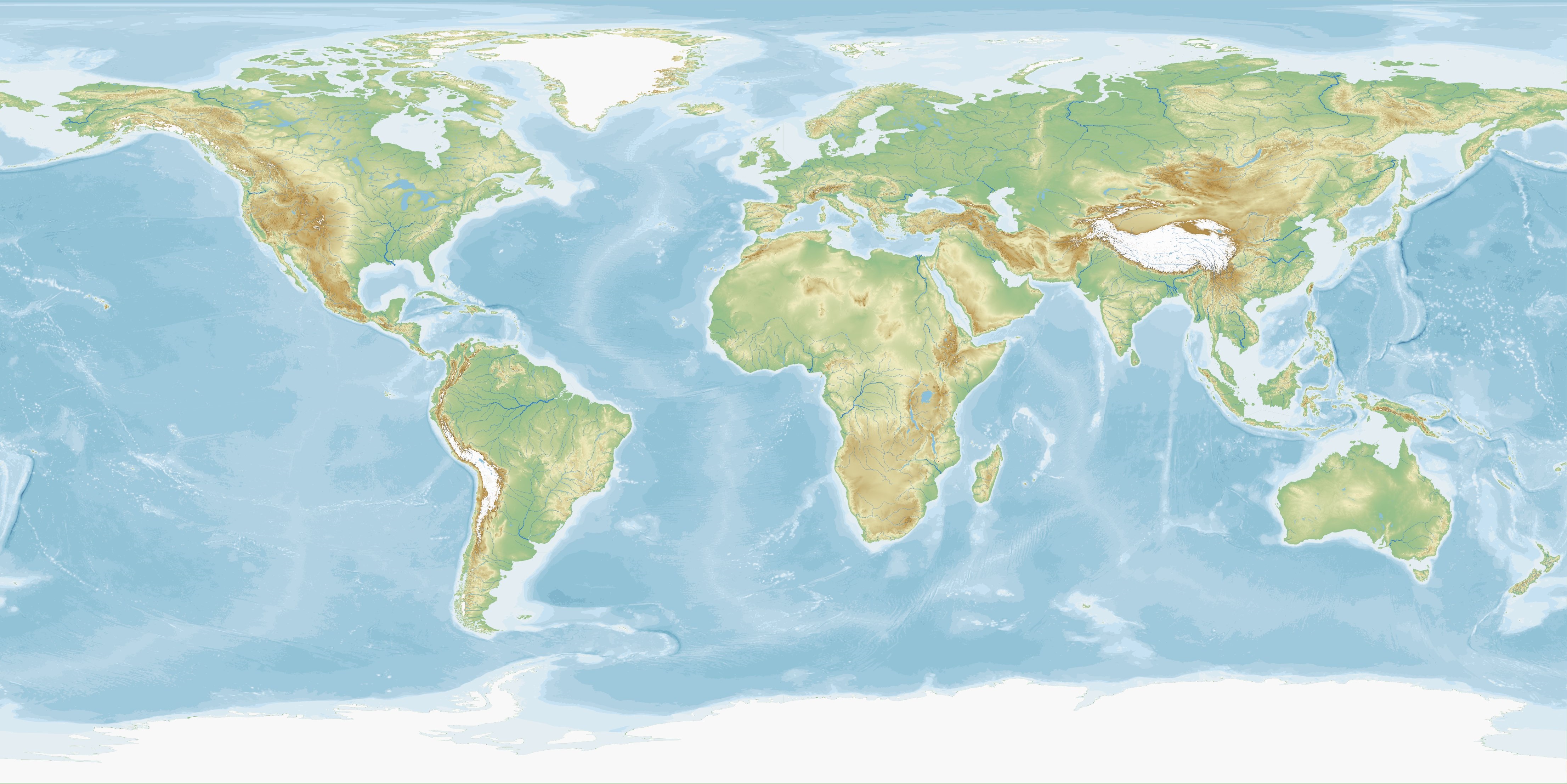 Pacific OceanAtlantic OceanUnited StatesRocky MountainsUnited States
📌 Why in News?
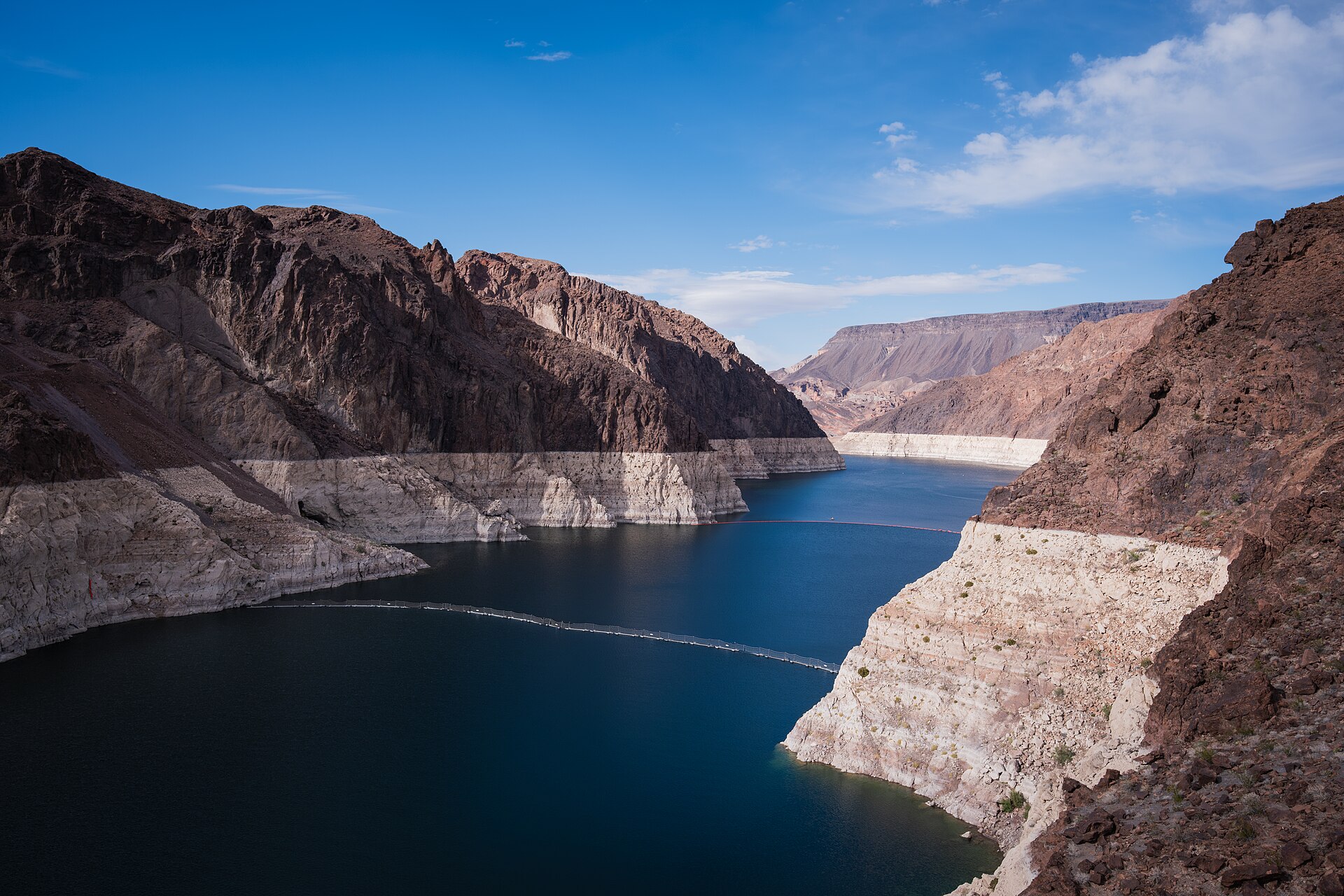
Lake Mead, the largest artificial reservoir by volume in the United States, has fallen to a record-low water level of 1,040.4 feet (317.1 meters) above sea level. This critical depletion of the reservoir, situated on the Arizona–Nevada border, is driven by a combination of the worst Rocky Mountain snowpack on record, a persistent multi-decade megadrought in the American Southwest, and long-term systemic over-allocation of the Colorado River's water among seven US basin states and Mexico. The decline threatens the domestic and agricultural water security of up to 30 million people and risks cutting the power generation capacity of the Hoover Dam by up to 70%.
Syllabus & Relevance
Prelims: World Geography (major rivers, reservoirs, and dams like Colorado River, Hoover Dam, Lake Mead, and Lake Powell).
Mains: GS-3 (Infrastructure - Energy, Water Resources, and Environmental Degradation - Climate Change and water security).
Why it matters for India
The crisis at Lake Mead offers vital lessons for India's water management, particularly concerning interstate river water disputes (such as the Cauvery, Krishna, and Satluj-Yamuna Link) and reservoir sustainability during monsoonal deficits.
It highlights the vulnerability of hydro-power infrastructure to falling water levels and illustrates the risk of over-allocating river basins based on historical high-flow averages rather than current climate realities—a threat India faces as Himalayan glaciers feed major river systems under rising global temperatures.
Static Foundation
Reservoir Dynamics: Artificial reservoirs regulate river flows, balance seasonal variations, and serve multiple economic purposes, including domestic water supply, irrigation, and hydroelectricity.
Colorado River System: A principal river of the Southwestern US and northern Mexico, rising in the Rocky Mountains and historically draining into the Gulf of California.
Hoover Dam & Elwood Mead: Completed in 1936, the Hoover Dam is a concrete arch-gravity dam.
Lake Mead was named after Elwood Mead, the US Bureau of Reclamation Commissioner (1924-1936) who oversaw its development.
Twin-Reservoir Management: Lake Mead and Lake Powell (behind Glen Canyon Dam) operate as a coordinated system to buffer flow variations and distribute water under the Colorado River Compact.
'Bathtub Ring' Phenomenon: A stark visual indicator of reservoir depletion, where white calcium carbonate and other mineral deposits are left exposed on the canyon walls as the water level drops.
Data, Reports, Cases & Examples
1,040.4 feet (317.1 meters): The record-low water level of Lake Mead, well below its full pool level of 1,220 feet.
31,047,000 acre-feet: The volumetric capacity of Lake Mead at full pool (approximately 38.3 billion cubic meters), stretching 115 miles upstream with 550 miles of shoreline.
2,338 square miles: The area of the Lake Mead National Recreation Area established in 1936, stretching along 240 miles of the Colorado River.
70%: The potential reduction in Hoover Dam's hydroelectric power generation caused by falling turbine efficiency due to low water levels.
25 to 30 million: The population in the American Southwest dependent on Lake Mead for drinking water and irrigation.
Eight Jurisdictions: The seven US basin states (Arizona, California, Nevada, Colorado, New Mexico, Utah, and Wyoming) and Mexico that hold legal water allocations.
Prelims Quick Facts
Lake Mead is the largest man-made reservoir by volume in the United States, formed by the construction of the Hoover Dam on the Colorado River in the 1930s.
The reservoir lies along the border of Arizona and Nevada, located approximately 25 miles east of Las Vegas.
It was established as the first U.S. National Recreation Area in 1936.
Lake Mead works alongside Lake Powell (situated behind the Glen Canyon Dam) as part of a twin-reservoir system for the Colorado River basin.
The primary inflow to Lake Mead is snowmelt originating from the Rocky Mountains.
TRAP: Candidates may be misled into believing Lake Mead is a natural lake; it is entirely artificial, created by the Hoover Dam.
TRAP: It might be assumed that Lake Mead's water levels are determined solely by local rainfall in Nevada/Arizona, whereas the primary driver is actually remote Rocky Mountain snowpack.
Mains-only layer✍️ Open Mains Perspective & Answer FrameworkClick to expand ↓
Mains Perspective
Background
Lake Mead is a critical hydrological and economic pillar for the American Southwest, storing water for over 25 million people and driving agricultural irrigation and green energy through the Hoover Dam. However, a combination of climate-induced stressors and historic water rights overallocation has brought the reservoir to its lowest level since its filling in the 1930s.
Significance
- Water Security: Lake Mead is the lifeblood of major urban centers (such as Las Vegas, Phoenix, and parts of Southern California) and extensive agricultural zones. Its depletion triggers mandatory water cuts, forcing states to rely on deeper, energy-intensive pumping technologies.
- Clean Energy Generation: As water levels drop, the hydraulic head driving the Hoover Dam's turbines decreases. This drop in efficiency threatens to reduce electricity output by up to 70%, destabilizing the regional power grid during peak summer demand.
- Ecological and Recreational Value: The shrinkage of the 2,338-square-mile national recreation area affects local biodiversity, water quality, and tourism industries.
India-specific Implications
- Glacial Melt Dependency: Similar to the Colorado River's dependence on Rocky Mountain snowpack, India's major river basins (Ganga, Indus, Brahmaputra) rely heavily on Himalayan glaciers. Climate change-induced alterations in snowfall patterns present parallel water security risks for India.
- Interstate Disputes: The over-allocation among the seven US basin states mirrors India's complex interstate water disputes, such as the Cauvery River or the Satluj-Yamuna Link canal. It shows that over-allocating water based on historical high-flow averages rather than current climate realities leads to systemic crises.
Challenges and Criticisms
- Historical Over-allocation: The fundamental legal frameworks governing the Colorado River were designed during abnormally wet periods in the early 20th century, overallocating more water than the river naturally discharges.
- Persistent Megadrought: Climate change has locked the region into a multi-decade dry spell, accelerating evaporation rates and reducing precipitation resilience.
- Inflexible Treaties: Adjusting allocation agreements between seven sovereign states and Mexico is highly contentious, leading to political deadlocks and delayed conservation measures.
Way Forward
- Dynamic Allocation Models: Transitioning from fixed historical volume allocations to flexible, percentage-based allocations that adjust based on annual active inflows and snowpack levels.
- Enhanced Water Conservation: Scaling up micro-irrigation, wastewater recycling, and urban water conservation (as pioneered by Las Vegas) to reduce demand.
- Coordinated Basin-wide Governance: Developing unified conservation agreements across all basin states and neighboring nations (Mexico) to ensure the long-term sustainability of the twin-reservoir system of Lake Mead and Lake Powell.
Answer Framework
Introduction
Introduce Lake Mead as the largest artificial reservoir in the United States, which recently fell to a historic low level of 1,040.4 feet. Mention that this crisis illustrates the growing vulnerability of transboundary water bodies to climate change and structural over-allocation.
Body Dimensions
- Underlying Causes: Discuss the ecological factors (record-low Rocky Mountain snowpack and a multi-decade megadrought) and policy factors (over-allocation of water beyond natural river flow to seven basin states and Mexico).
- Socio-Economic Impacts: Detail the consequences, such as the threat to domestic water supply for 25-30 million people and a potential 70% drop in Hoover Dam's hydroelectric power generation.
- Key Policy Lessons for India: Draw parallels with Himalayan-fed rivers and interstate water sharing conflicts (like the Cauvery and Indus). Highlight the need to move away from rigid historical water sharing contracts to dynamic, flow-sensitive treaties.
Conclusion
Conclude by advocating for demand-side water conservation, basin-wide cooperative governance, and climate-resilient water pricing to preserve critical reservoir assets globally.
Possible Mains Question
The severe depletion of Lake Mead highlights the compounding vulnerabilities of climate change and historical water over-allocation on major transboundary river basins. Analyze the causes of this crisis and discuss the policy lessons it offers for India's interstate river water management and reservoir sustainability.