Map focus
31.10°, 77.17° · maps only where geography mattersHimachal Pradesh
CountryIndia→StateHimachal Pradesh
India locator
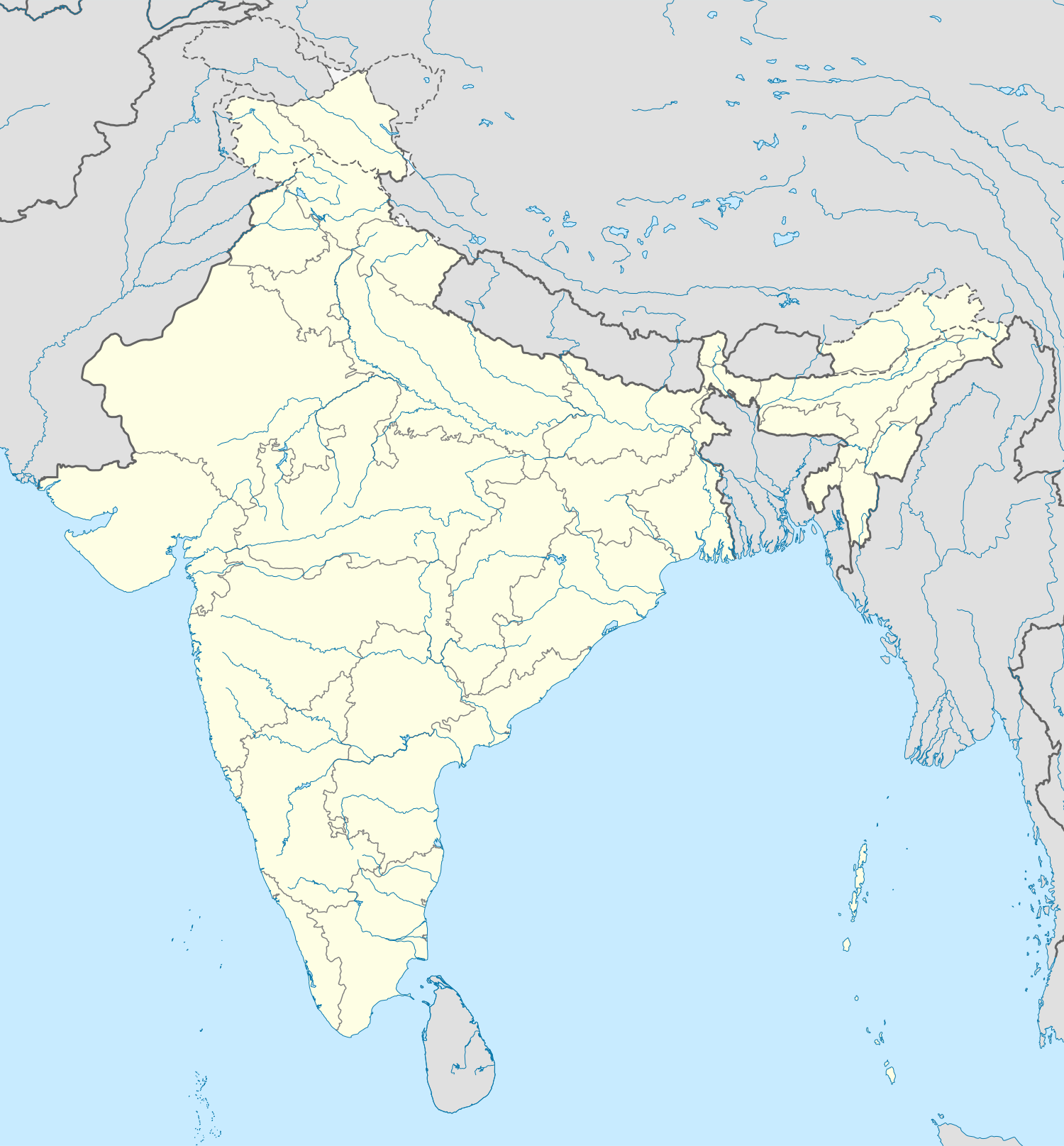 Himachal Pradesh
Nearby states
PunjabHaryanaUttarakhandHimachal PradeshRegional places
ShimlaDharamshalaHimachal PradeshRivers & relief
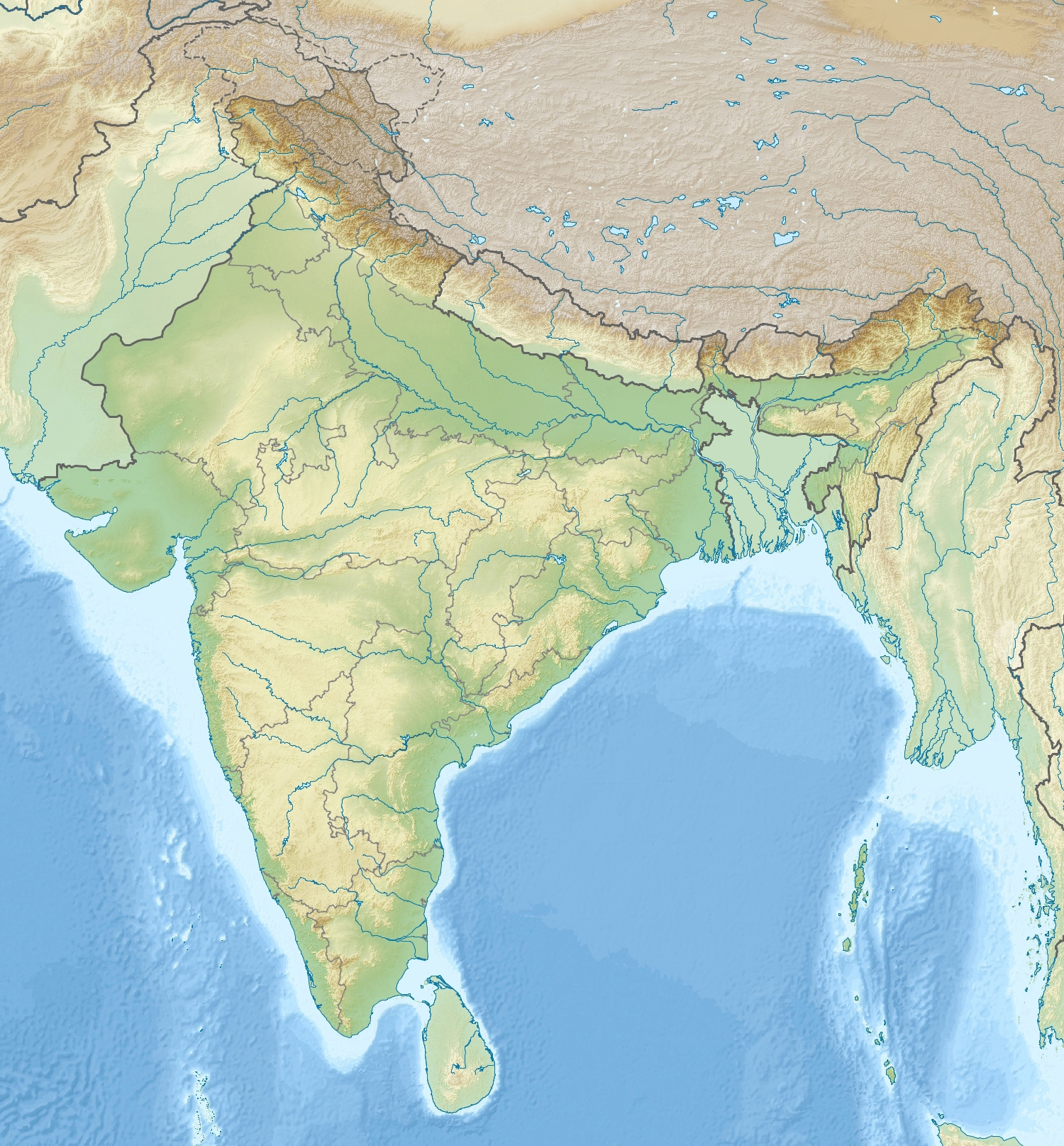 SutlejDhauladharHimachal Pradesh
NP / WLS nearby
Great Himalayan NPKibber WLSHimachal PradeshStates: Punjab · Haryana · UttarakhandNearby: Shimla · DharamshalaPhysical: Sutlej · DhauladharProtected: Great Himalayan NP · Kibber WLS
📌 Why in News?
CURRENT **AFFAI****RS 33 **Water Security Departmental Summit, Jal **Jeevan Mission **2.0 and the New Cooperative-Federalism Model Category: Governance, Water Resources, Rural Development and Environment | GS: GS Paper II, GS Paper III | Date: 2 September 2026 WHY IN NEWS
- The Ministry of Jal Shakti's two-day Departmental Summit on 1
- 2 September 2026 became the first in a proposed series of sectoral Centre-State summits designed to convert cooperative federalism into time-bound implementation.
- The summit focused on timely completion of water infrastructure, Jal Sanchay Jan BhaGIdari, drinking-water source sustainability and Jal **Jeevan Mission **2.0 .
- The significance is not merely another conference: it attempts to link political leadership, officials, State-specific constraints, measurable actions and shared accountability.
- For UPSC , the theme connects federalism, local government, public health, groundwater , climate adaptation, women, rural service delivery, behavioural change and outcome-based governance. TOP DATA & FACTS FOR UPSC u Departmental Summit held on 1
- 2 September 2026 at Sushma Swaraj Bhawan, New Delhi. u It is the first in a proposed series of Departmental Summit s built around Team India and cooperative federalism . u Four core areas: timely water-infrastructure implementation u Jal Sanchay Jan BhaGIdari u drinking-water source sustainability u Jal **Jeevan Mission **2.0 . u Jal **Jeevan Mission **was launched in 2019 to provide functional household tap connections to rural households. u India receives highly seasonal rainfall u the monsoon supplies the overwhelming share of annual precipitation in a few months, creating simultaneous flood and scarcity risks. u groundwater is central to India's drinking-water and irrigation systems, making aquifer recharge and demand management essential. u Water is a State subject in the Seventh Schedule, while the Union plays major roles through inter-State rivers, financing, standards, national missions and environmental regulation. u 73 rd Constitutional Amendment GIves Panchayats an important role in local water management through State devolution and Eleventh Schedule functions. u Water security is inseparable from sanitation: contaminated sources can convert infrastructure coverage into a public-health failure. u climate change intensifies rainfall variability, heat, drought, glacial risks, extreme precipitation and coastal salinity intrusion. HISTORICAL PERSPECTIVE
- Traditional Indian water systems were decentralised and ecology-specific
- johads in Rajasthan, ahar-pyne systems in Bihar, tanks in peninsular India, kuhls in Himachal Pradesh, bamboo drip irrigation in the Northeast and stepwells in western India.
- Colonial and post-colonial water policy increasingly favoured large dams, canals and enGIneering-led supply.
- These projects supported irrigation and hydropower but sometimes weakened local water institutions and created displacement and ecoloGIcal costs.
- Post-Independence programmes progressively expanded rural drinking-water coverage.
- The policy trajectory shifted from mere infrastructure creation to service delivery, water quality, source sustainability and community management.
- Jal **Jeevan Mission **represented a major transition from habitation-level infrastructure to household-level functional tap service, with village action plan s, water-quality monitoring and community participation.
- The current JJM 2.0 discourse reflects a second transition: from connection creation toward reliability, maintenance, source sustainability and long-term service quality. ECONOMIC, GEOGRAPHICAL & ENVIRONMENTAL PERSPECTIVE
- Reliable drinking water reduces household time costs, especially the unpaid labour of women and GIrls.
- Time saved can improve school attendance, paid work, childcare and productivity.
- Water insecurity raises agricultural risk, food inflation and rural indebtedness.
- Irrigation efficiency, crop choice, groundwater governance and watershed restoration therefore have macroeconomic consequences.
- Large infrastructure without operation-and-maintenance financing can become stranded public capital.
- Life-cycle budgeting must include electricity, pump repair, treatment chemicals, testing, operator salaries and asset replacement.
- Geographically, India has extreme hydroloGIcal diversity
- Himalayan snow-fed basins, alluvial aquifers of the Indo-Gangetic plain, hard-rock aquifers of the Deccan, arid western India, flood-prone eastern plains and salinity-prone coasts.
- Environmental sustainability requires catchment protection, wetlands, recharge zones, spring-shed management, river floodplains and wastewater reuse.
- A tap connection cannot compensate for a collapsing aquifer.
- Urbanisation increases competition between cities, agriculture and ecosystems.
- Long-distance water transfers may solve immediate supply gaps but can externalise ecoloGIcal costs to source reGIons.
- Climate-resilient water planning must combine storage diversity: reservoirs, tanks, ponds, aquifer recharge, soil moisture, wetlands and household/community rainwater harvesting. SOCIAL PERSPECTIVE
- Women bear a disproportionate burden of water collection and household water management.
- Reliable piped supply can therefore produce a gender dividend, but women should also have decision-making roles in village water committees.
- Water quality has direct effects on diarrhoeal disease, fluorosis, arsenicosis and other health burdens.
- Q UAN tity targets without quality surveillance can create false security.
- Scheduled Tribes, remote habitations, drought-prone villages and informal settlements often face higher per-capita service costs.
- Equity must be built into financing rather than expecting uniform market-style cost recovery.
- Community ownership improves surveillance of leaks, source contamination and service breakdown, but participation cannot become a pretext for transferring unfunded responsibilities to villages. POLITICAL & GOVERNANCE PERSPECTIVE
- Because water is primarily a State subject, national missions succeed only through negotiated federalism.
- The Union can finance, standardise and convene, while States control departments, local implementation and much of water allocation.
- Inter-State river disputes reveal the limits of purely administrative solutions.
- Basin-level data sharing, ecoloGIcal flows and transparent modelling are necessary for trust.
- Departmental Summit s can improve coordination if they produce publicly trackable commitments
- otherwise they risk becoming event-based governance.
- District collectors, enGIneering departments, Panchayats, water-user groups and State utilities need interoperable data and clear responsibility matrices. EXAMPLES, CASE STUDIES & **ANSWER-**WRITING VALUE
- Examples: Rajasthan's johads demonstrate community recharge
- Bihar's ahar-pyne systems show floodwater harvesting and irrigation adapted to plains
- Himalayan spring-shed programmes demonstrate the need to manage recharge zones rather than only build pipes.
- Agriculture perspective: rice and sugarcane in water-stressed reGIons illustrate the mismatch between crop incentives and hydrology.
- MSP , procurement, electricity pricing, micro-irrigation and crop diversification must be aligned with water budgets.
- Urban-rural linkage: cities often draw water from distant reservoirs and aquifers, while wastewater and polluted drains flow back into river systems.
- Integrated basin management must therefore bridge municipal and rural jurisdictions.
- groundwater perspective: aquifers are invisible common-pool resources.
- Individual borewells create a tragedy-of-the-commons problem where each user has an incentive to pump before neighbours do.
- Metering, feeder separation, solar-pump design and community rules can change incentives.
- Public-health perspective: safe water reduces diarrhoeal disease and improves nutrition outcomes because repeated infections undermine nutrient absorption.
- Water policy therefore complements health, sanitation and Poshan interventions.
- Data perspective: water dashboards should distinguish infrastructure existence from functionality.
- Random household verification, water-quality samples and downtime records are stronger than self-reported completion figures.
- Climate perspective: future rainfall may be more variable even where annual totals change modestly.
- More intense rainfall increases runoff and flood damage unless catchments, wetlands and urban drainage can absorb peaks.
- Federal perspective
- successful water governance requires a subsidiarity principle
- decisions should be taken at the lowest level capable of manaGIng the relevant hydroloGIcal unit
- while basin-scale issues require higher coordination.
- Fiscal perspective: capital grants should be paired with realistic O&M expenditure.
- A village scheme that cannot pay for pumping, treatment, repairs and operators may fail after the construction phase.
- Finance Commissions and State grants can help Panchayats meet recurring costs, but service standards should accompany funding.
- Technology perspective: smart meters, pressure sensors and remote monitoring can identify leaks and abnormal consumption, yet technology should be deployed where maintenance capacity exists.
- Low-tech chlorination, source fencing, recharge structures and trained local operators may produce greater value in many rural settings.
- River-basin perspective: administrative boundaries rarely match hydroloGIcal boundaries.
- Upstream land use, dams, sand mining and pollution affect downstream users.
- Basin planning should therefore combine ecoloGIcal flows, water-quality goals, floodplain protection and transparent allocation rules.
- Demand-management perspective: India's water debate often focuses on creating supply.
- Long-run security also requires reducing losses, efficient irrigation, reuse, crop diversification, industrial recycling and urban water pricing that protects basic needs while discouraGIng waste.
- Example for Mains
- Chennai's water stress, Bengaluru's lake and groundwater pressures, Rajasthan's community harvesting traditions and Bihar's flood-drought paradox can be used to show that Indian water insecurity takes multiple geographical forms requiring locally differentiated solutions. PROS / SIGNIFICANCE
- Mission -mode coordination can reduce delays in water infrastructure.
- Source-sustainability focus corrects the weakness of connection-only approaches.
- Centre-State problem solving can spread successful local practices rapidly.
- Community participation can improve maintenance and behavioural ownership.
- Integrated water security strengthens health, agriculture, climate resilience and gender outcomes. CONS / CHALLENGES
- Targets may encourage rushed construction or inflated functionality reporting.
- Fragmented departments can create duplication between drinking water, irrigation, groundwater and rural development.
- Free or underpriced electricity for pumping can accelerate groundwater depletion.
- Climate variability can make historical water-yield assumptions unreliable.
- Poor O&M financing may reduce functionality after initial capital expenditure. WAY FORWARD
- Move from 'tap installed' to independently verified service-level indicators: q UAN tity, quality, pressure, hours of supply, downtime and grievance resolution.
- Prepare aquifer- and watershed-based water budgets at local level and link new extraction to recharge capacity.
- Converge MGNREGS , watershed programmes, JJM , AMRUT , agriculture and State schemes around catchment restoration and recharge.
- Use sensor data selectively, but combine it with social audits and field verification to avoid dashboard-only governance.
- Strengthen laboratories and community water-quality testing, with rapid remediation protocols for arsenic, fluoride and microbial contamination.
- Promote treated-wastewater reuse for industry, landscaping and agriculture where safe, preserving freshwater for drinking.
- GIve Panchayats predictable O&M grants and technical support instead of only capital assets.
- Publish Departmental Summit action matrices with State-wise milestones so cooperative federalism becomes measurable. PRELIMS QUICK REVISION u Water is primarily in the State List u inter-State rivers and river valleys involve Union powers. u JJM launched in 2019 for functional household tap connections in rural India. u Water security requires source sustainability plus quality plus service functionality. u Traditional systems: johad, ahar-pyne, tank, kuhl, bamboo drip irrigation. u 73 rd Amendment and Panchayats are relevant to decentralised water governance. PROBABLE MAINS QUESTION Water security cannot be achieved through infrastructure creation alone. Analyse how Jal **Jeevan Mission **2.0 can combine cooperative federalism, source sustainability, local institutions and climate resilience. SOURCES
- Sources used for factual grounding: PIB
- Ministry of Jal Shakti and PMO releases, 31 August- 2 September 2026 .
🎯
Exam map
Syllabus & Relevance
Paper: GS Paper II, GS Paper III
Theme: Governance, Water Resources, Rural Development and Environment
🎯
Rapid revision
Prelims Quick Facts
Prelims facts will be updated soon.